Work Under Our Labour Grows
A Tug of War between AI and Human Creativity
Work Under Our Labour Grows is a series of considered meditations on the nature of work today and tomorrow. More pictures than proposals, our interest is in expressing possible forms this aspect of living – central to our evolution as a species - might assume as the conditions originally prompting our adaptation are encountered only by a few, their proxies, or simply cease to exist.
The title is borrowed from a passage in Paradise Lost, where Eve describes the “pleasant” labor of tending to the garden, while observing that this natural state of activity only begets more work. This paradox has driven humans toward the pursuit of continued optimization. But what will we do when that project has succeeded? Will cultural, social, technological motivations other than optimization emerge? Will a new project of returning to essentials - returning to “the garden” - replace other agendas?
Few subjects are more central to issues of global equity than labor, and, to William Gibson’s famous observation, “the future” will always be distributed unevenly. Nevertheless, all humans have been affected in some way by the changes brought by technology, for better or worse. Our intention is to open windows to futures without overt value - some good, some bad, some indifferent - but all possible.
Missions
#1:
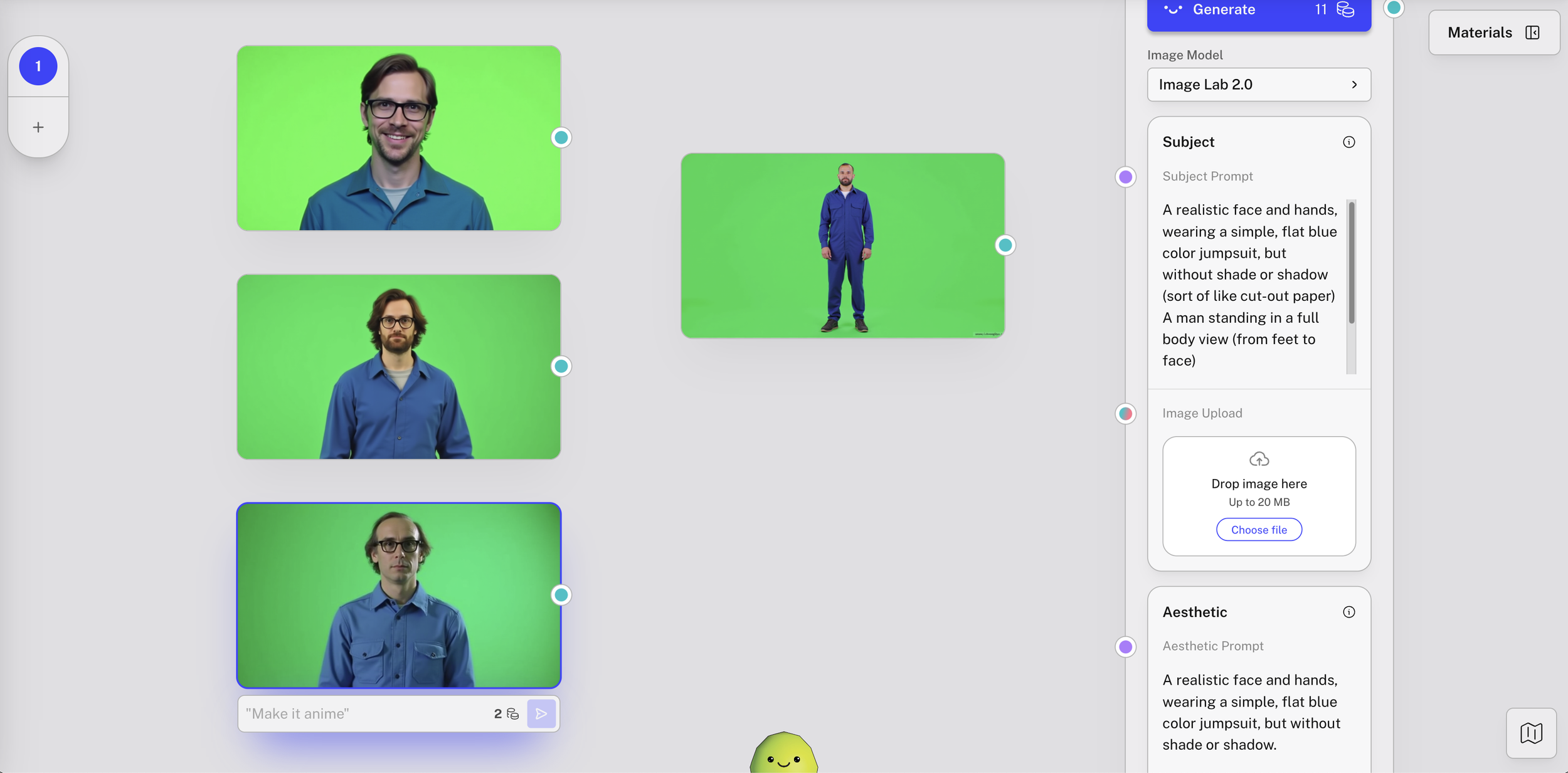
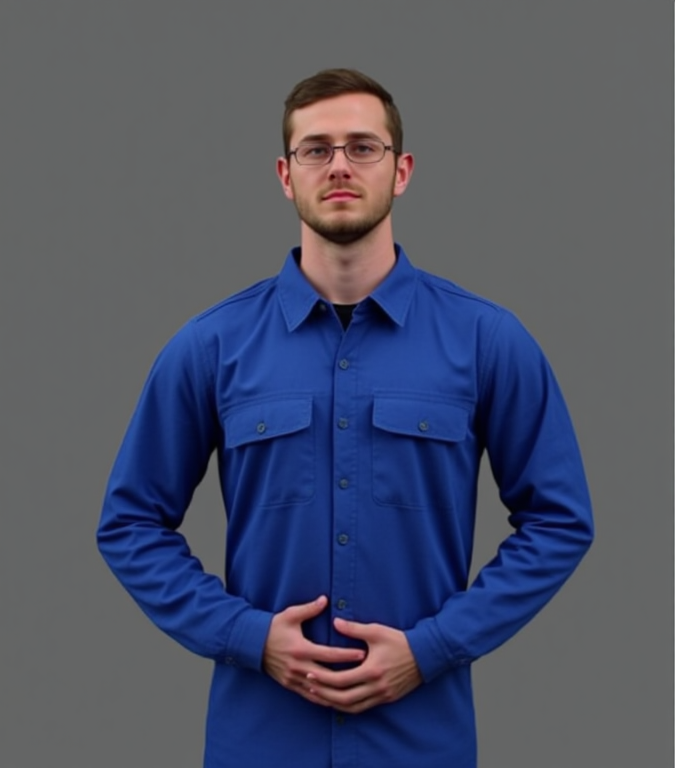
Experiment with rendering people with realistic faces and hands. There should be no issues with portraits or copyright. They should wear simple, flat blue colored jumpsuits and normal basic glasses.
#2:
Since this project is a teamwork-based, each participants should take at least one scene out of 11 scenes. In my case, the idea is people just hanging out, being together after “work.” They are still wearing their jumpsuits in the late-afternoon or twilight.
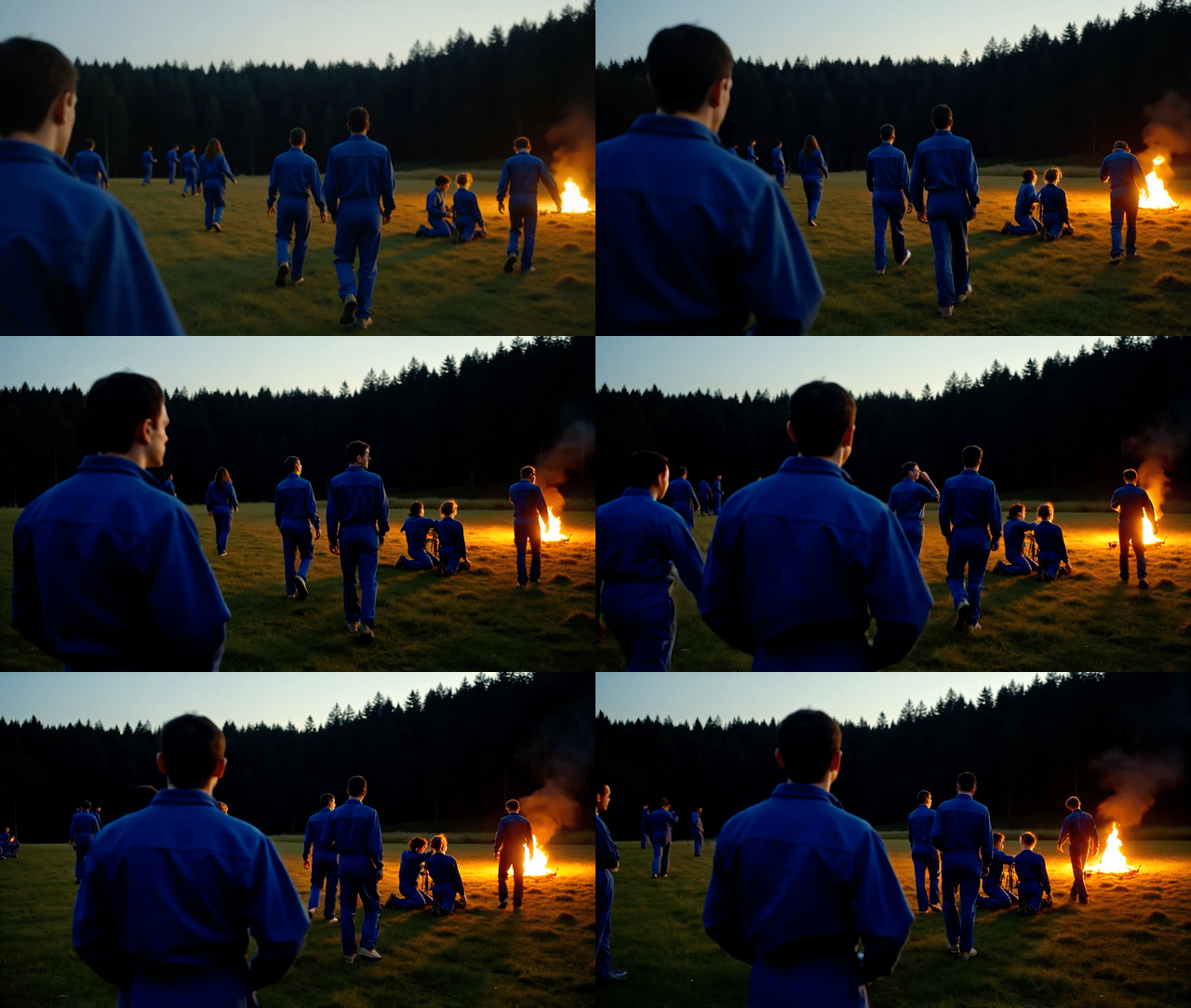
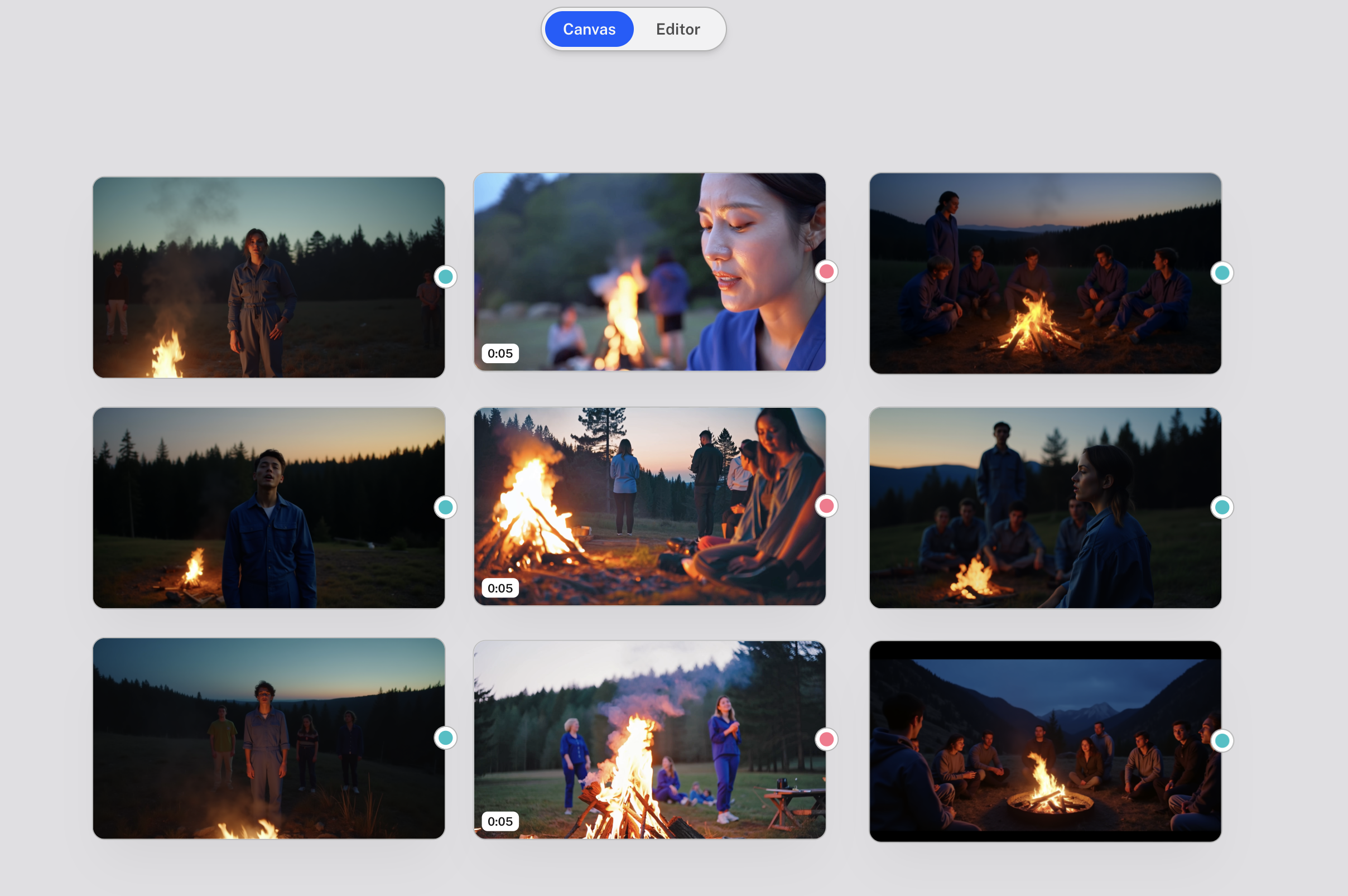
1st Scene: People sitting and standing around a large fire, against the twilight sky.
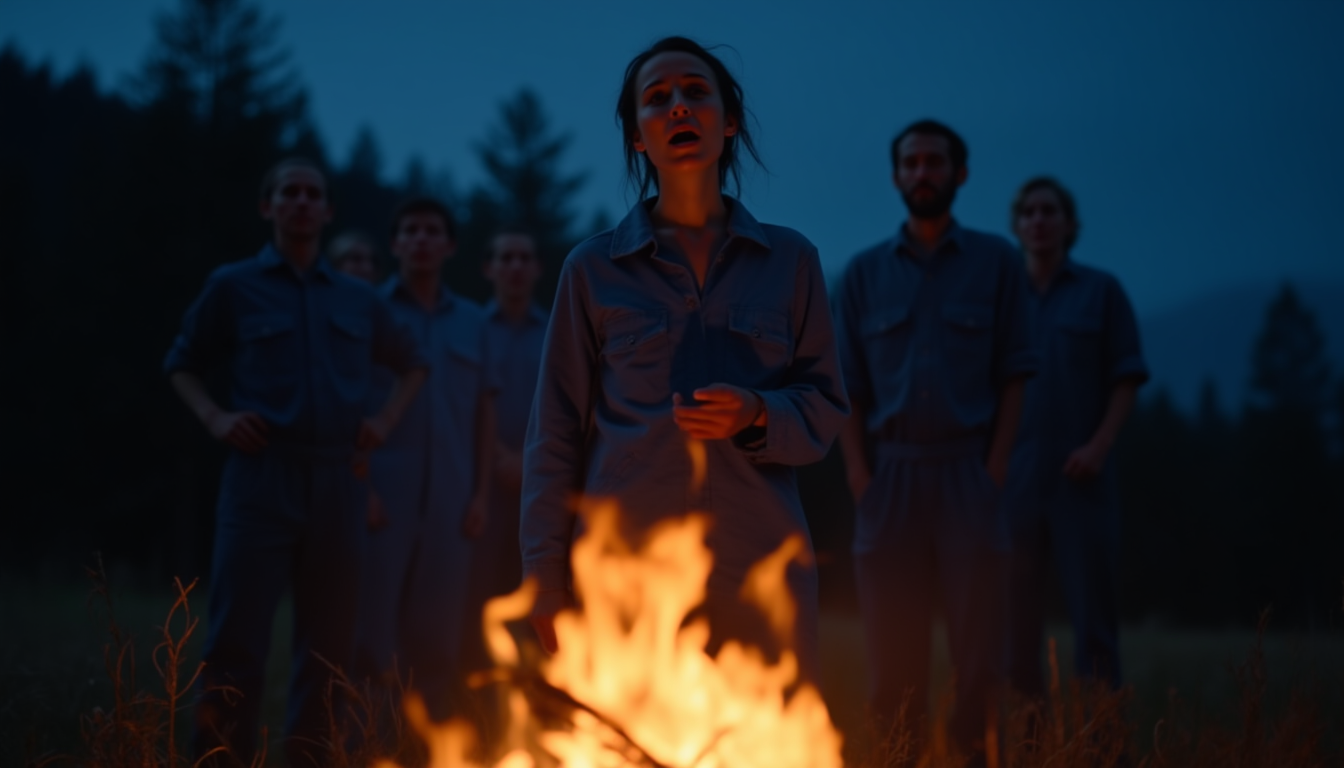
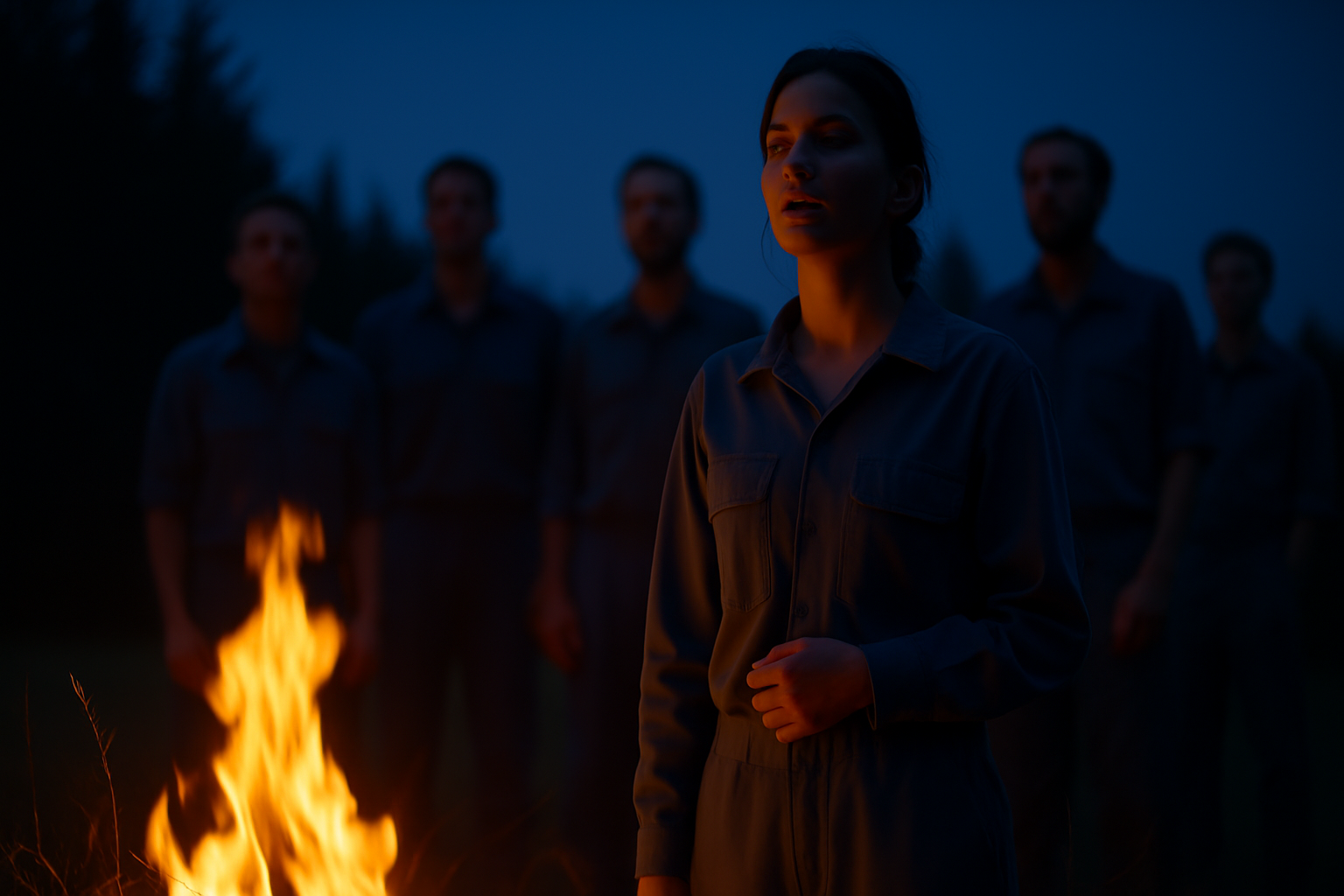
2nd Scene: Several of the people start singing in a very geometric composition.
3rd Scene: A person’s head is generally cropped at the top of the frame in.
AI Tools
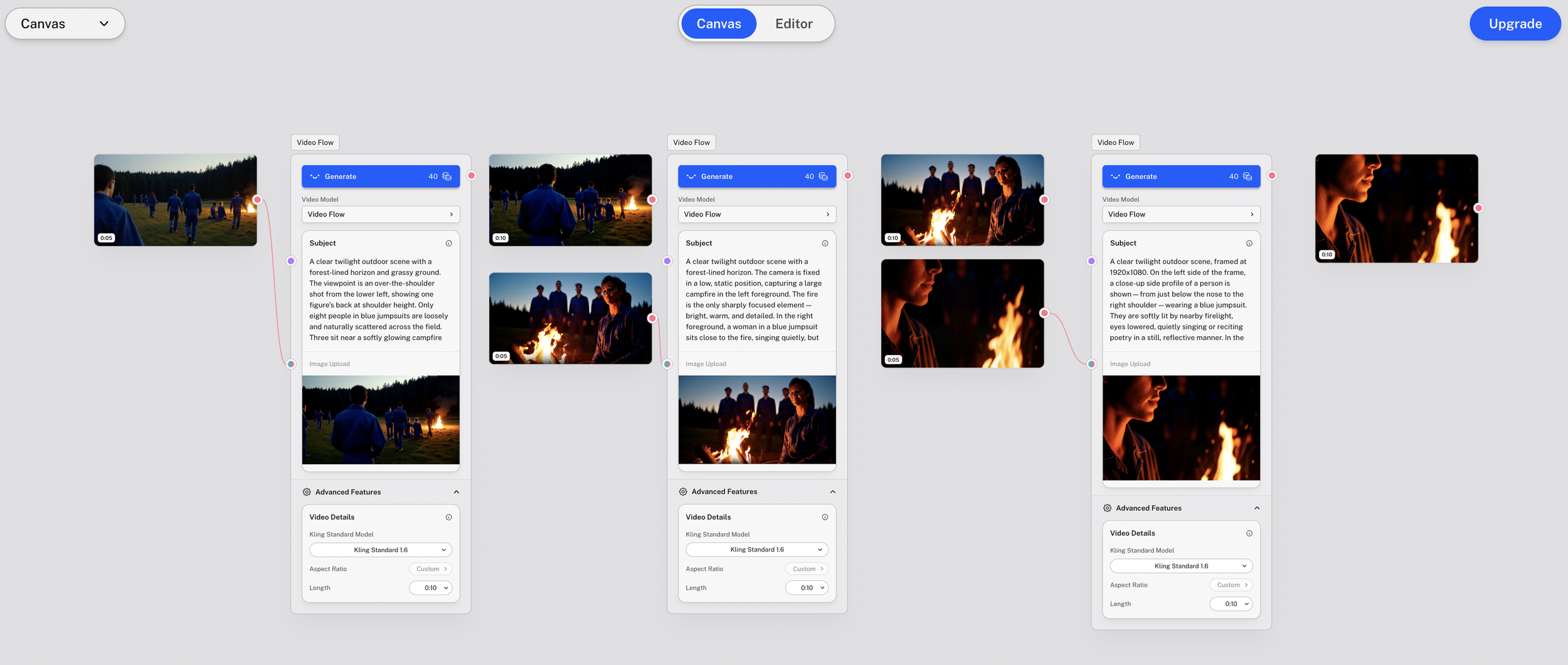
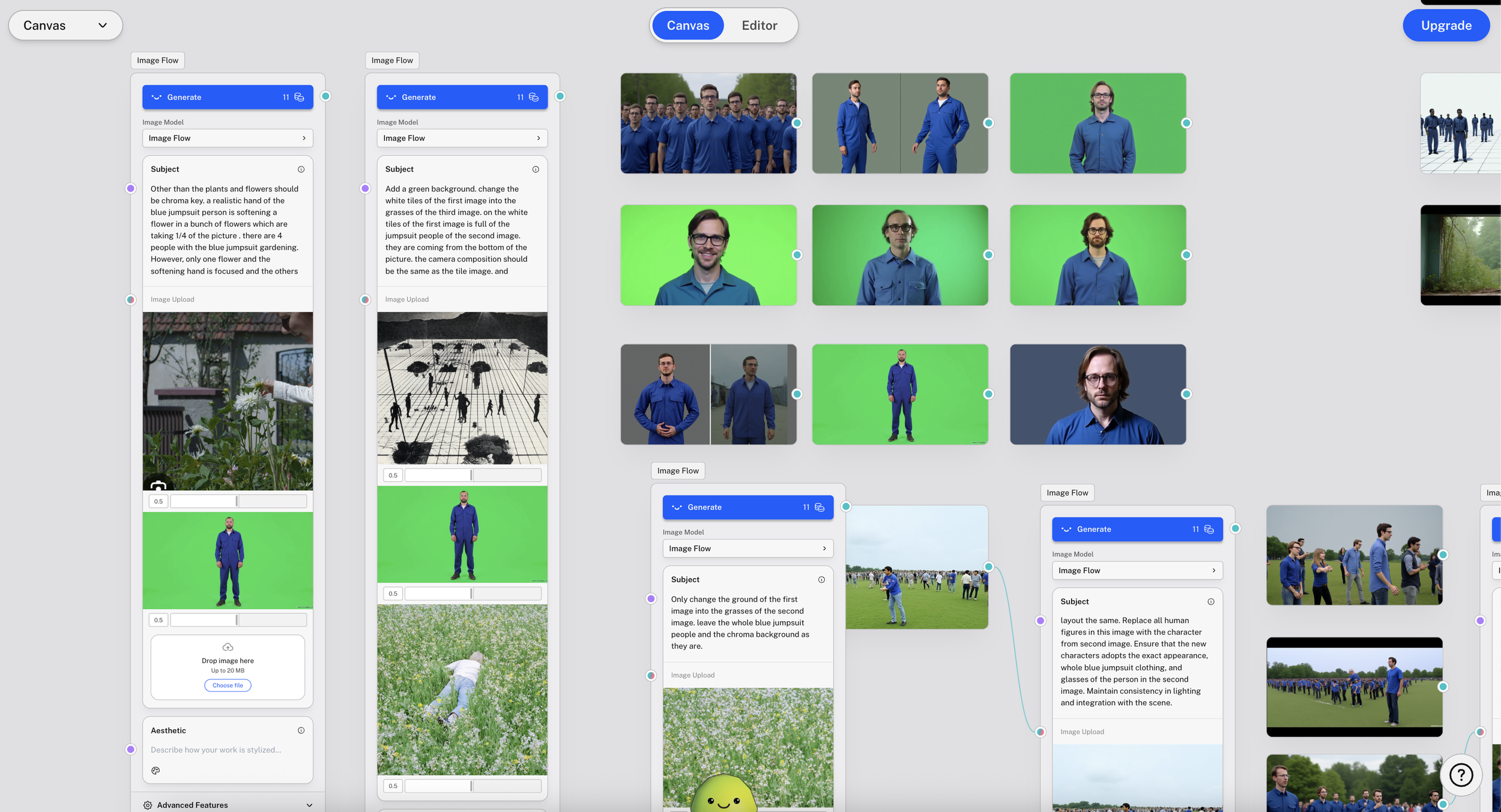
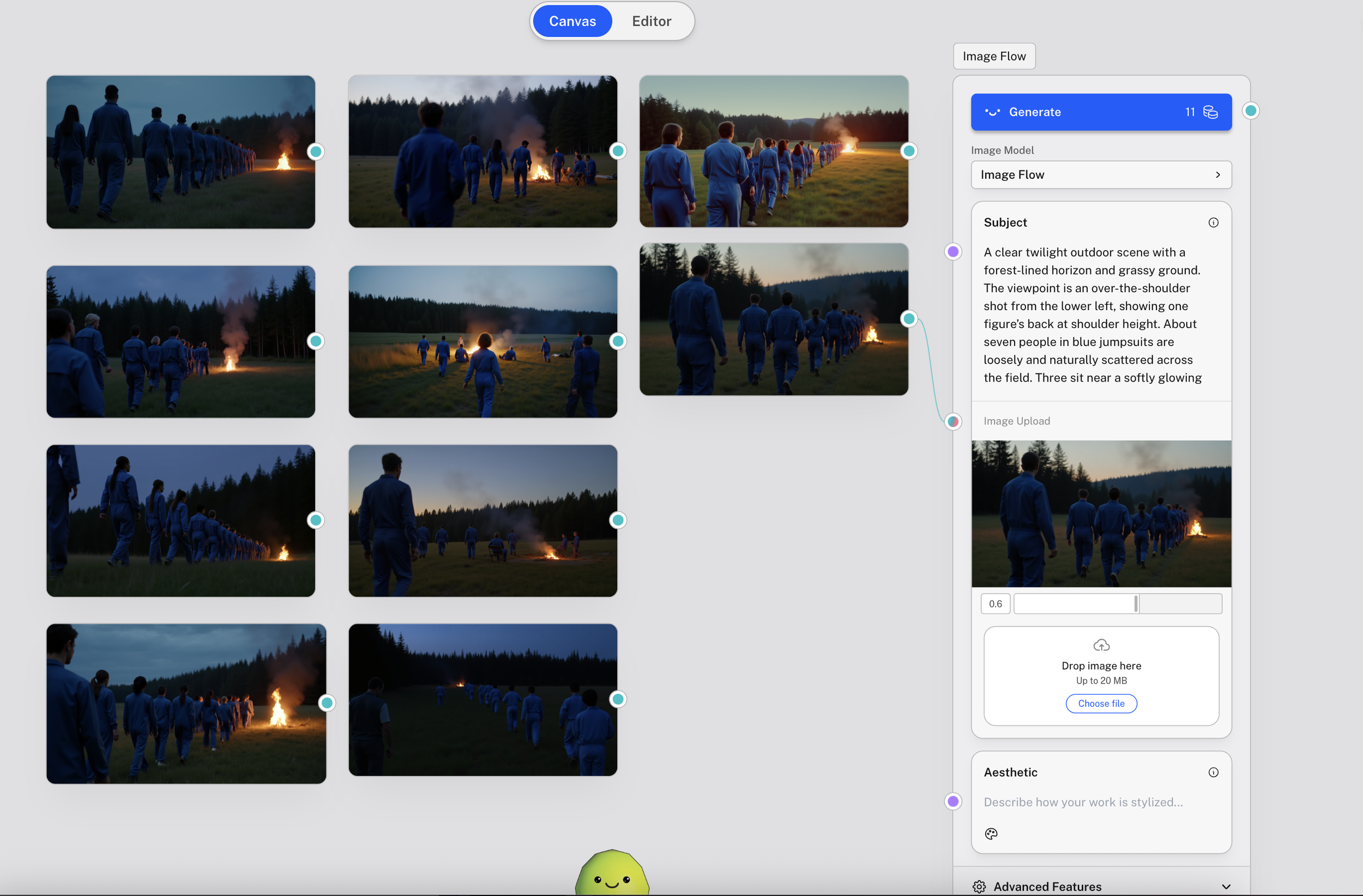
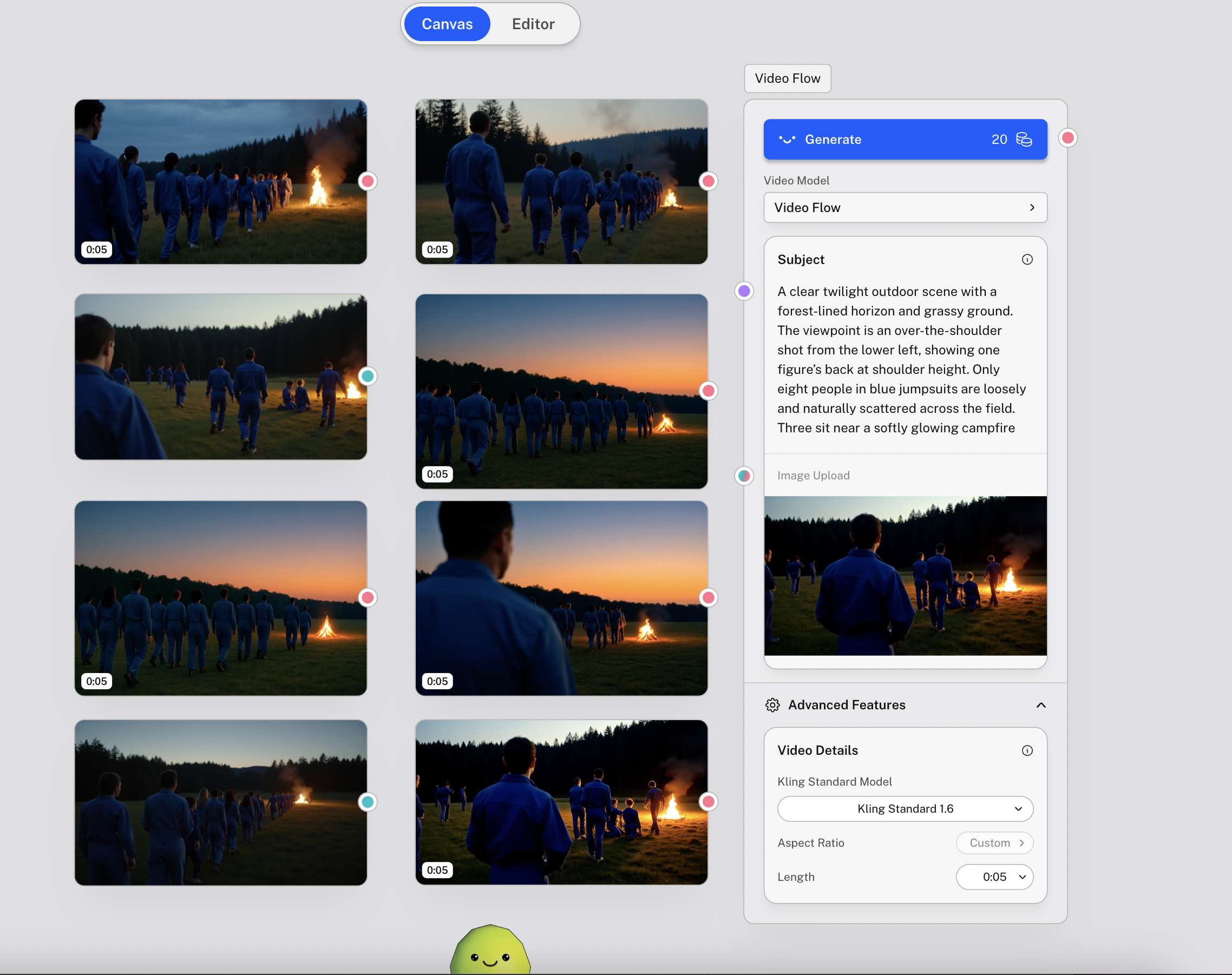
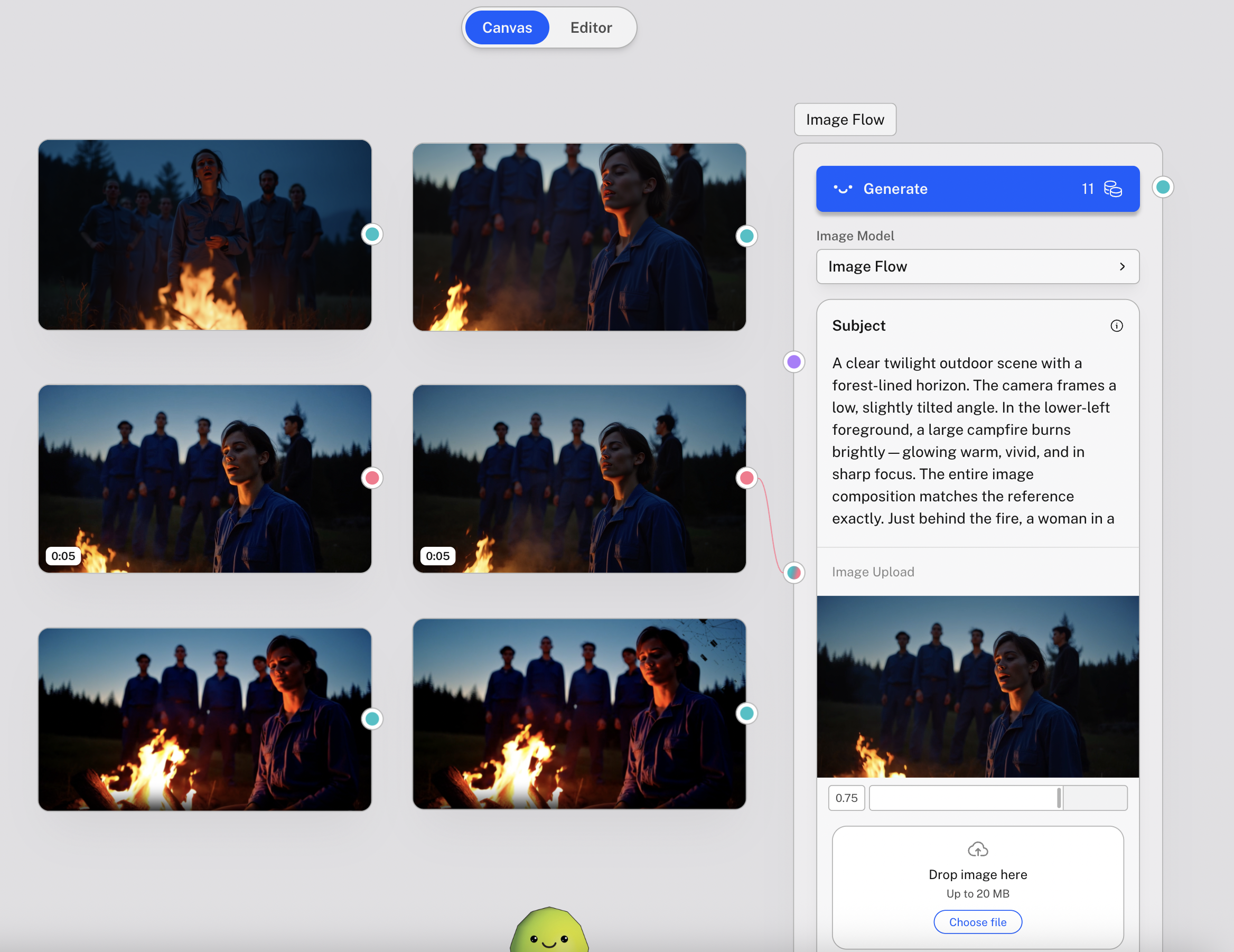
I used Superstudio video generator because compared to Runway or popular AI tools, its unique Blender-node-like interface made it easy to compare the past outcomes with prompts. Furthermore, since AI video generators were not able to consume the whole content of long prompts, it was good to put separate prompts into several connected nodes.
Rendering People
Realistic people with simple, flat blue colored jumpsuits and normal basic glasses.
Struggles & Solutions
My assumption on outcome was too different from the AI. Even I thought I gave it a certain, precise directions on visuals, it arbitrarily rendered my words into what I didn’t want. For example, I wanted to be simple whole blue jumpsuit in a full-body photo but AI made unnecessary details in mug-shot compositions and even it ignored some of directions randomly. Therefore, I kept generating until something close to my detail in 90 percents came out.
Prompt
A realistic face and hands, wearing a simple, flat blue color jumpsuit, but without shade or shadow (sort of like cut-out paper). A man standing in a full body view (from feet to face) Make sure to put him standing in front of the green chroma background as they are.


1st Scene
People sitting and standing around a large fire, against the twilight sky.
Struggles & Solutions
With the words of plurality and moving to somewhere, AI converted them into very cultic way, all people heading to a certain point within a neat line. Furthermore, the people didn’t go around the fire pit, rather they were passing by it. Therefore, I spread people naturally gathering around the pit, allowing some of them hovering around. I figured out AI tended to interpret prompts into very controlled ways which could be cultic to human audience.
Prompt
A clear twilight outdoor scene with a forest-lined horizon and grassy ground. The viewpoint is an over-the-shoulder shot from the lower left, showing one figure’s back at shoulder height. Only eight people in blue jumpsuits are loosely and naturally scattered across the field. Three sit near a softly glowing campfire on the right, relaxing after work. Three walk casually from the lower left, and two more approach from different angles. Everyone faces or drifts naturally toward the campfire, without forming lines or patterns. The group varies in age, race, and height, with organic, unforced spacing. Some glance sideways or chat quietly. Warm firelight casts long shadows, and the sky above is clear, fading from soft orange to deep twilight blue. The mood is peaceful, communal, and reflective. The scene must appear fully photo-realistic.


2nd Scene
Several of the people start singing in a very geometric composition.
Struggles & Solutions
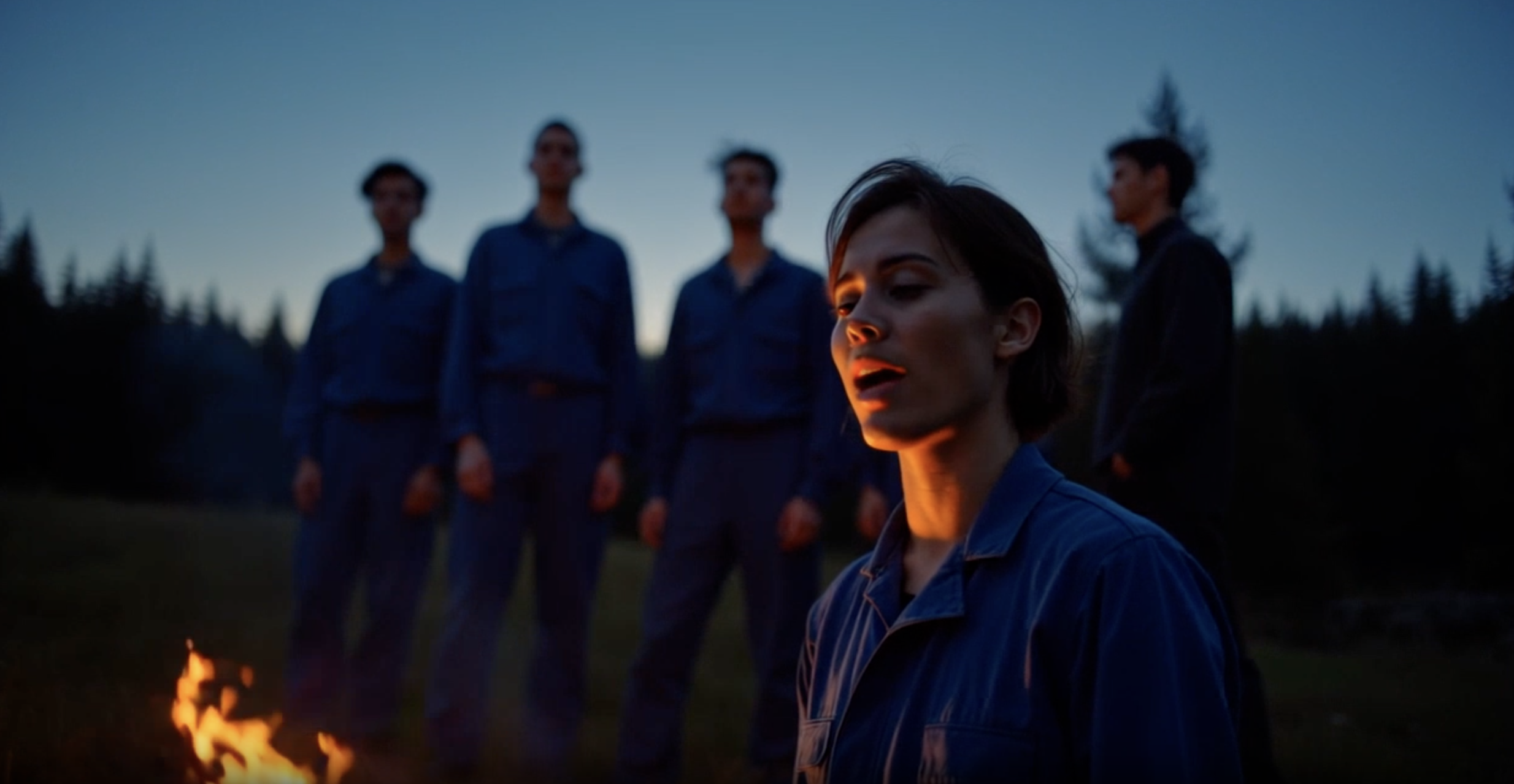
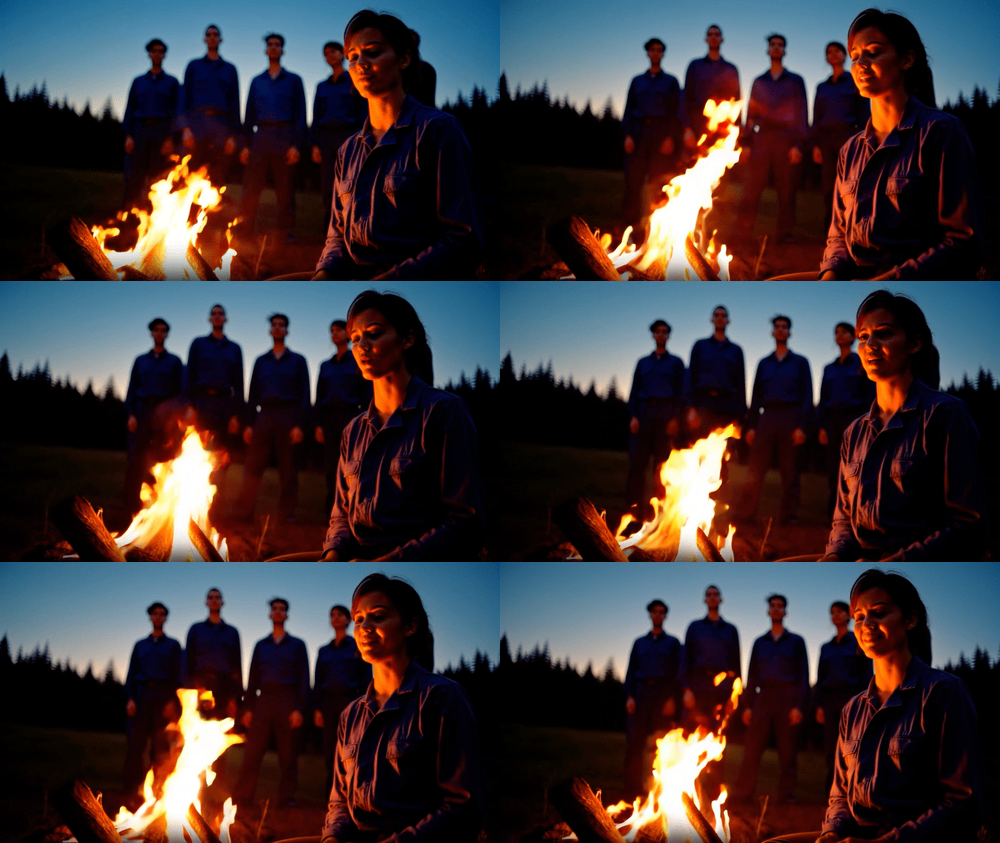
During this process, I made a myriad of revisions because my leading professor, Tim Durfee, was also felt difficult to bring his visual idea into words so I kept drawing simple storyboards until both of us made a sweet spot for the visuals. Furthermore, since I was an international student, I asked him how to express certain scenes into English such as “unstaged”, “communal”, or “camera capturing something” etc. As AI tends to omit some details, it was also critical to bring compressed jargons in the prompts. Additionally, it was hard to let AI distinguish several figures into foreground and background while I had to control a figure of the right corner behind the foreground singer to be removed or brought to the left of the singer. Therefore, I brought the fire pit apparently visible on the bottom left corner then all the figures gathered up on the left side of the singer. Finally the scene delivered my intentions better than before and well composed.
Prompt
A clear twilight outdoor scene with a forest-lined horizon. The camera is fixed in a low, static position, capturing a large campfire in the left foreground. The fire is the only sharply focused element—bright, warm, and detailed. In the right foreground, a woman in a blue jumpsuit sits close to the fire, singing quietly, but her face and body are softly blurred, just like the five standing figures behind her. All people in the scene are out of focus, their facial details obscured, blending gently into the shallow depth of field. The firelight casts warm tones across their clothing and faces. The figures stand or sit in natural, unstaged positions, facing the fire. The sky fades from orange to deep twilight blue. The mood is quiet, introspective, and communal. The composition must remain identical to the reference image. The entire scene must appear fully photo-realistic.
3rd Scene
A person’s head is generally cropped at the top of the frame in.
Struggles & Solutions
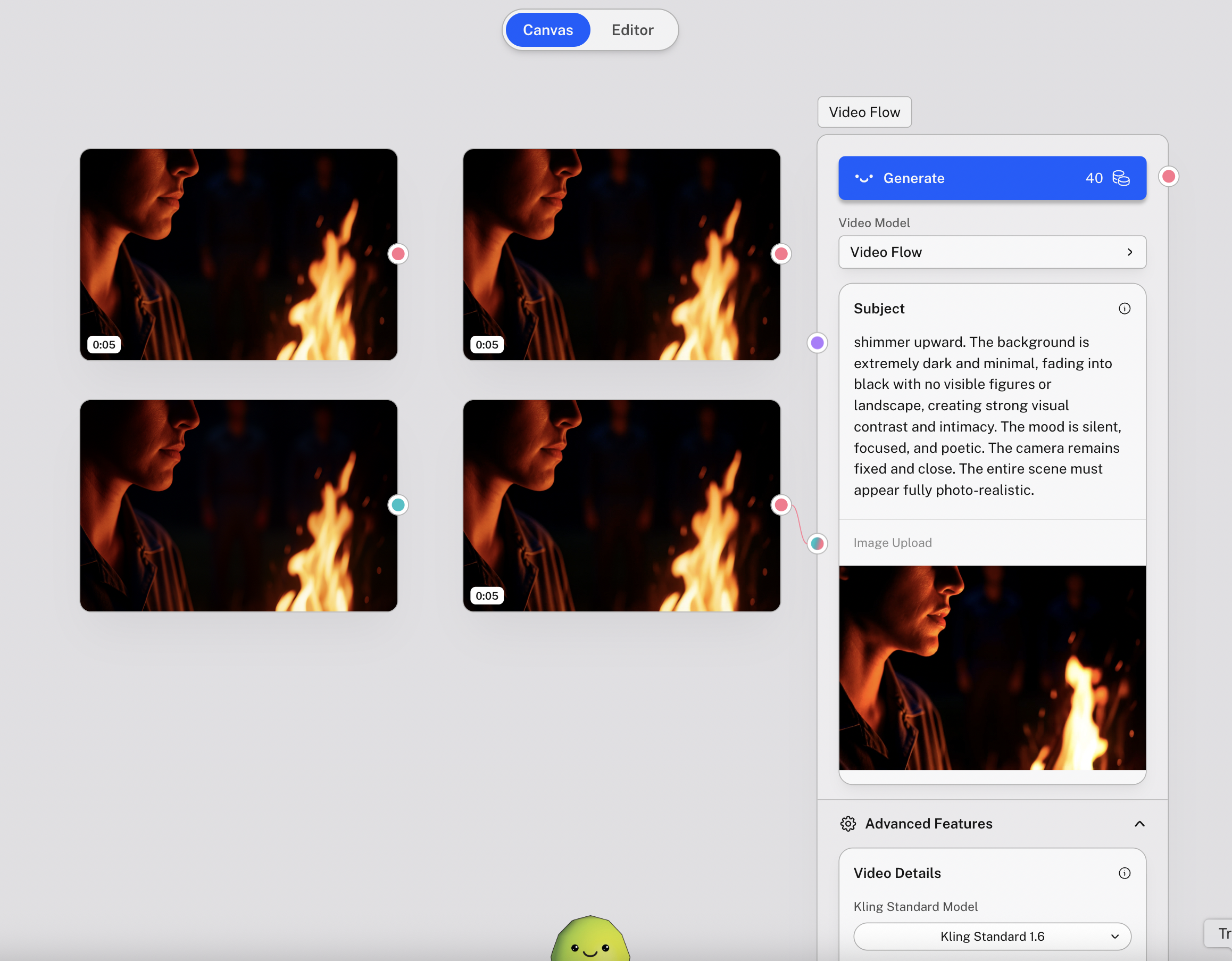
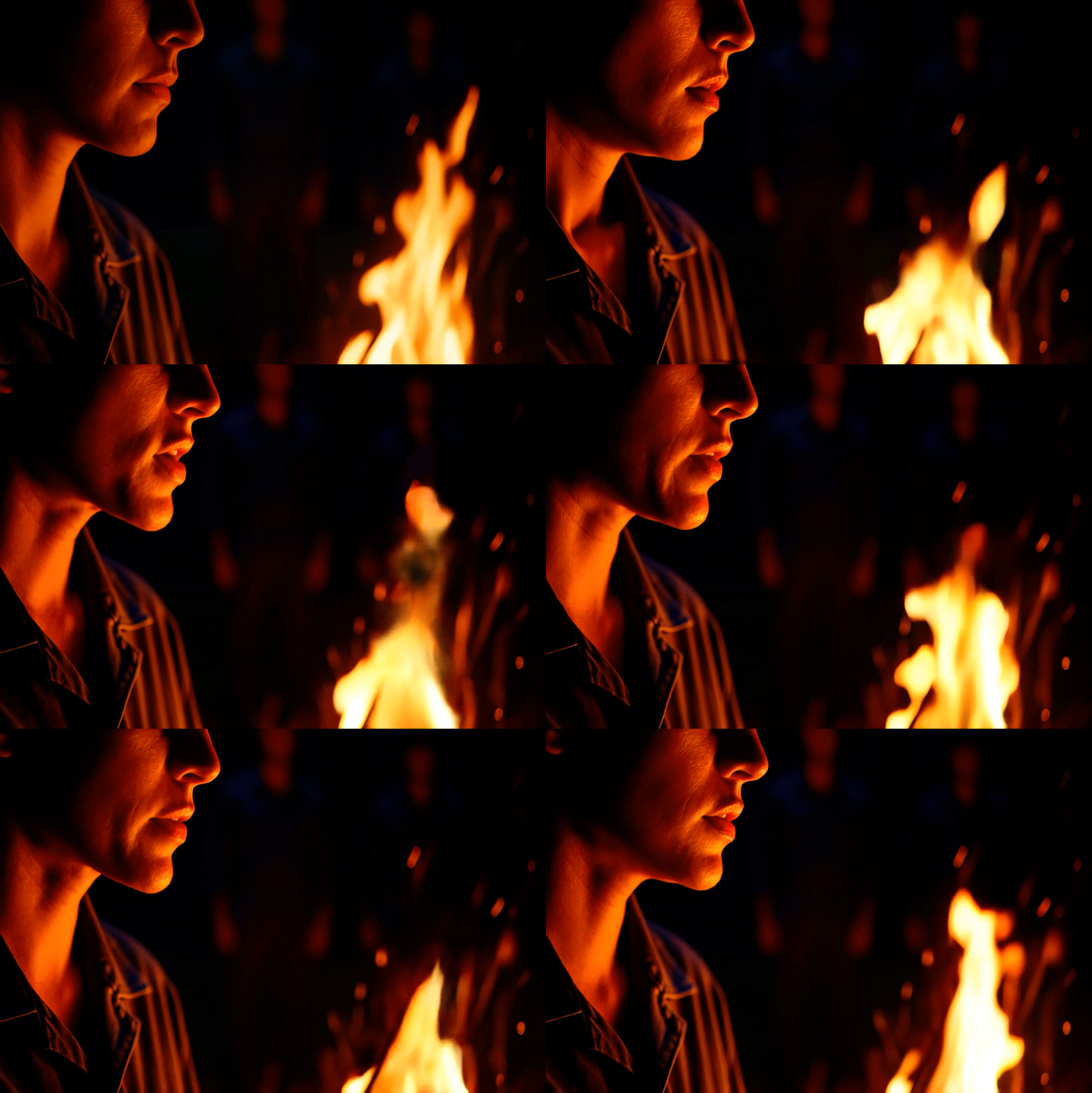
Compared to the former scenes, this last one was relatively easy. Firstly, I cropped the singer’s face near the fire pit and rendered the prompt into a picture then when it fit to my requirements, I generated a video based on the picture. However, in order to bring consistency with the 2nd scene, the strongly blurred bystanders were deployed in the background and I added more contrast on brightness between the singer around the fire and the dark background for better compositions.
Prompt
A clear twilight outdoor scene, framed at 1920x1080. On the left side of the frame, a close-up side profile of a person is shown—from just below the nose to the right shoulder—wearing a blue jumpsuit. They are softly lit by nearby firelight, eyes lowered, quietly singing or reciting poetry in a still, reflective manner. In the lower-right, only the tip of a campfire is visible—sharp, bright, and detailed—casting flickering flames and subtle heat shimmer upward. The background is extremely dark and minimal, fading into black with no visible figures or landscape, creating strong visual contrast and intimacy. The mood is silent, focused, and poetic. The camera remains fixed and close. The entire scene must appear fully photo-realistic.

Final Outcomes
In the beginning, I was so frustrated whenever AI ignored or flattened my intentions on its own and there was a big dissonance between human’s epistemology and deep-learning AI’s one. In spite of that, discussion with the co-workers and leader was so helpful for overcoming this frustration and I learned to critically evaluate the visuals produced by AI. Ultimately, the tug of war with AI made me aware of how many assumptions and omissions we have for visual perceptions and language.