Redefining Camouflage
Bringing “Blending” from Physical Illusion to Psychological Resonance
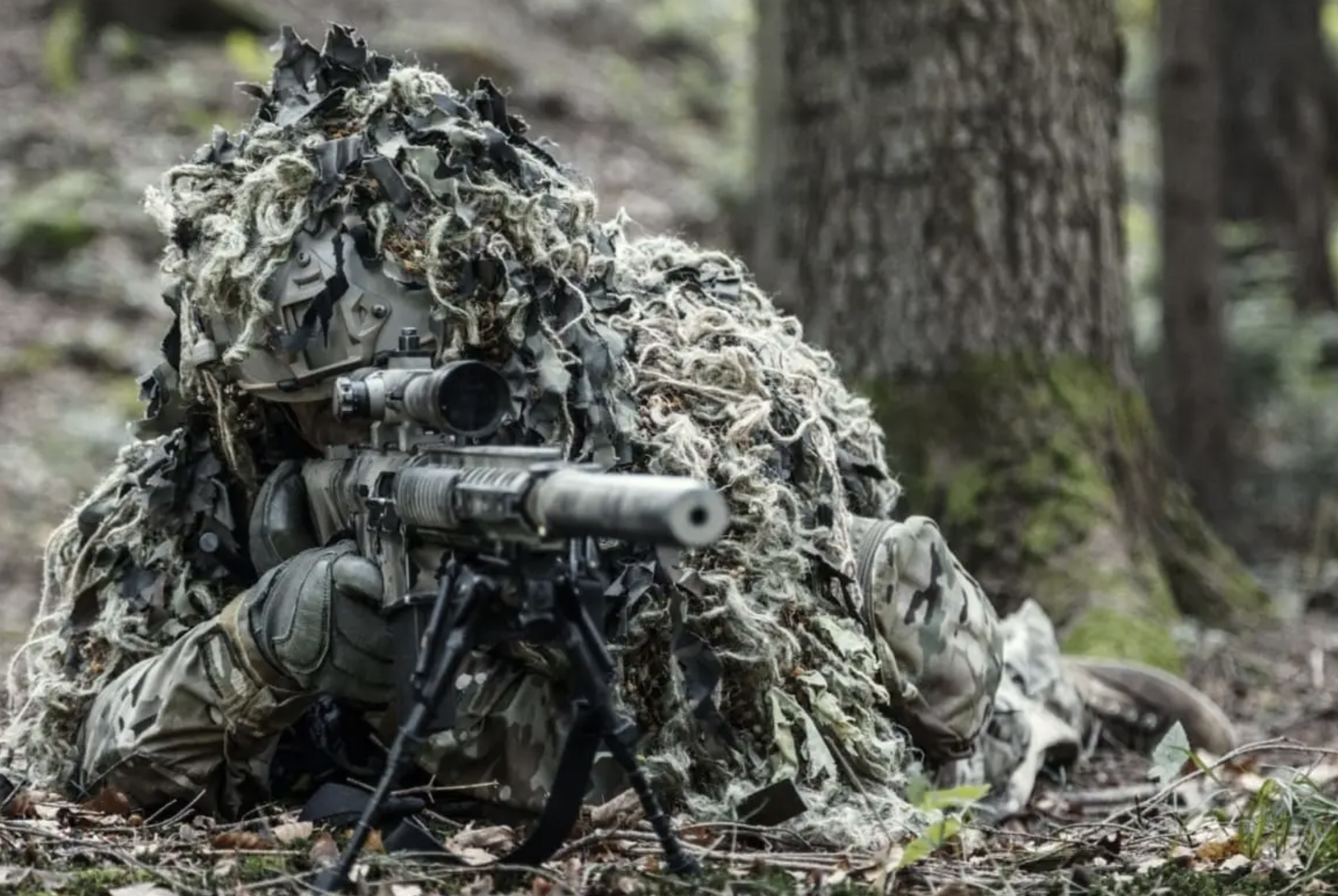
Generally, camouflages have been a military medium used to deceive hostiles by environmental blending.
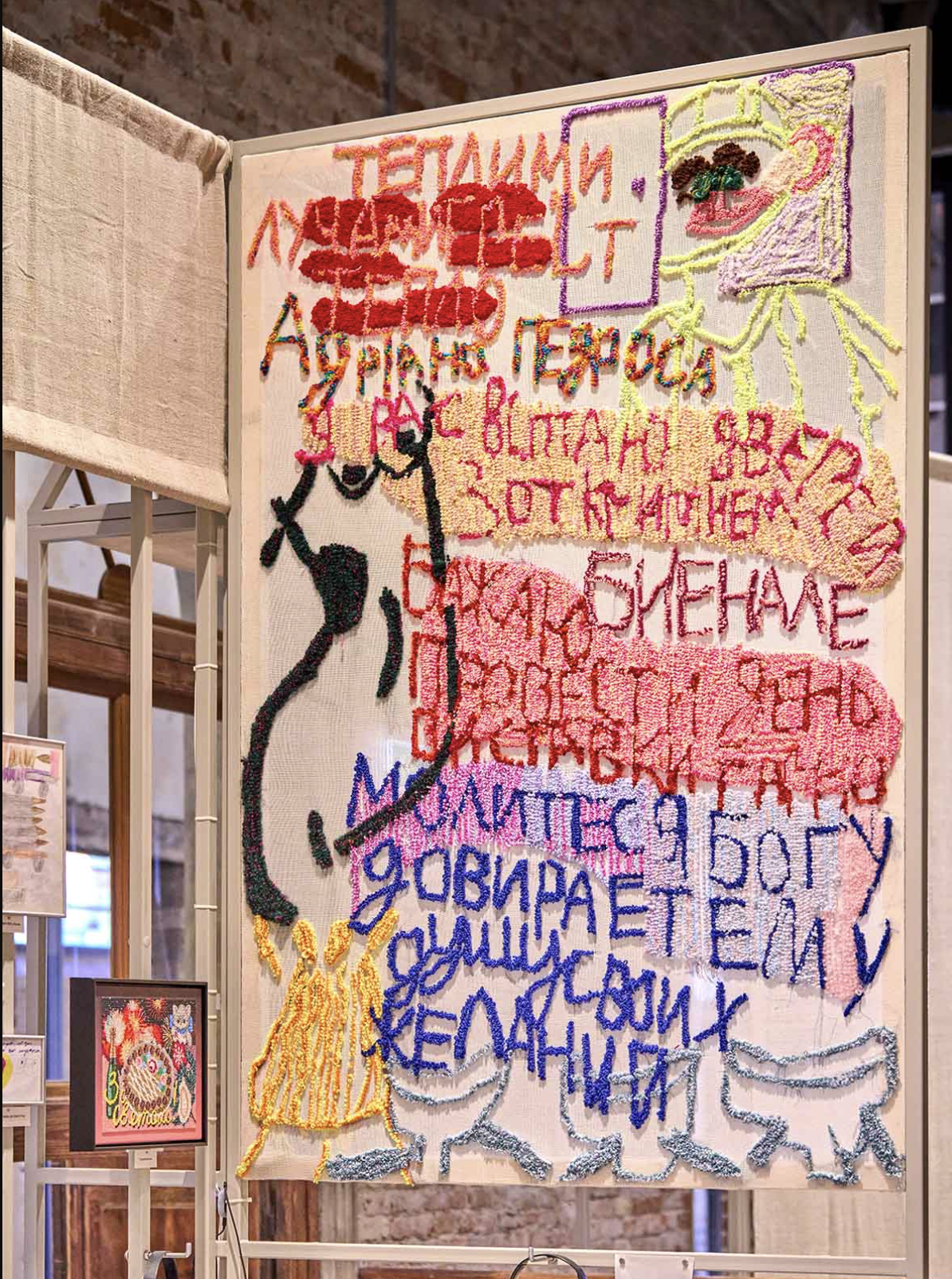
However, civilians outside of the battlefield tried to demilitarize the camouflages as a communicational channel or to protect people from new military AI systems. It sparked my idea to render the camouflages into media not as shattering humanity but as shaping creativity with surrounding communities.
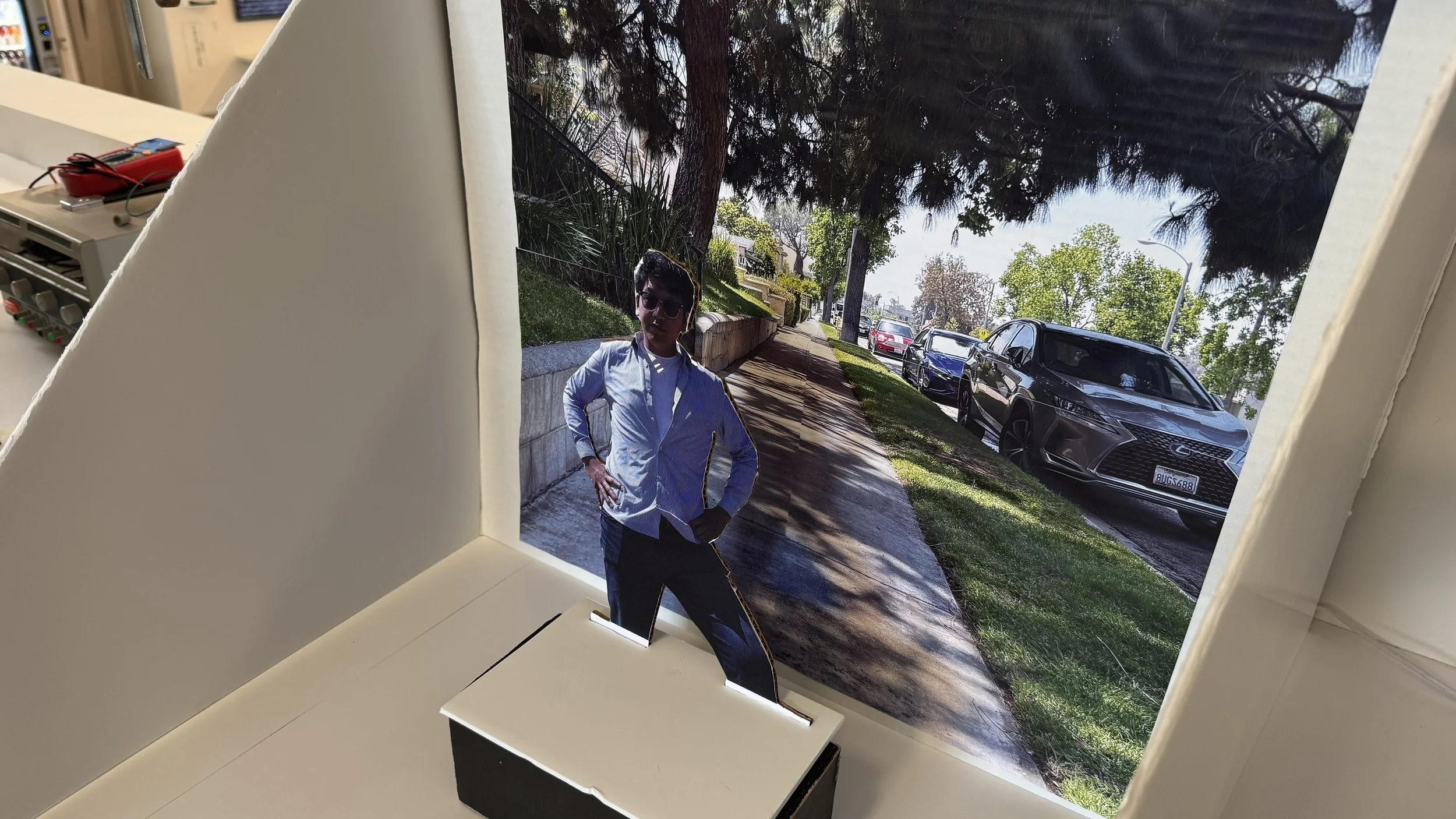
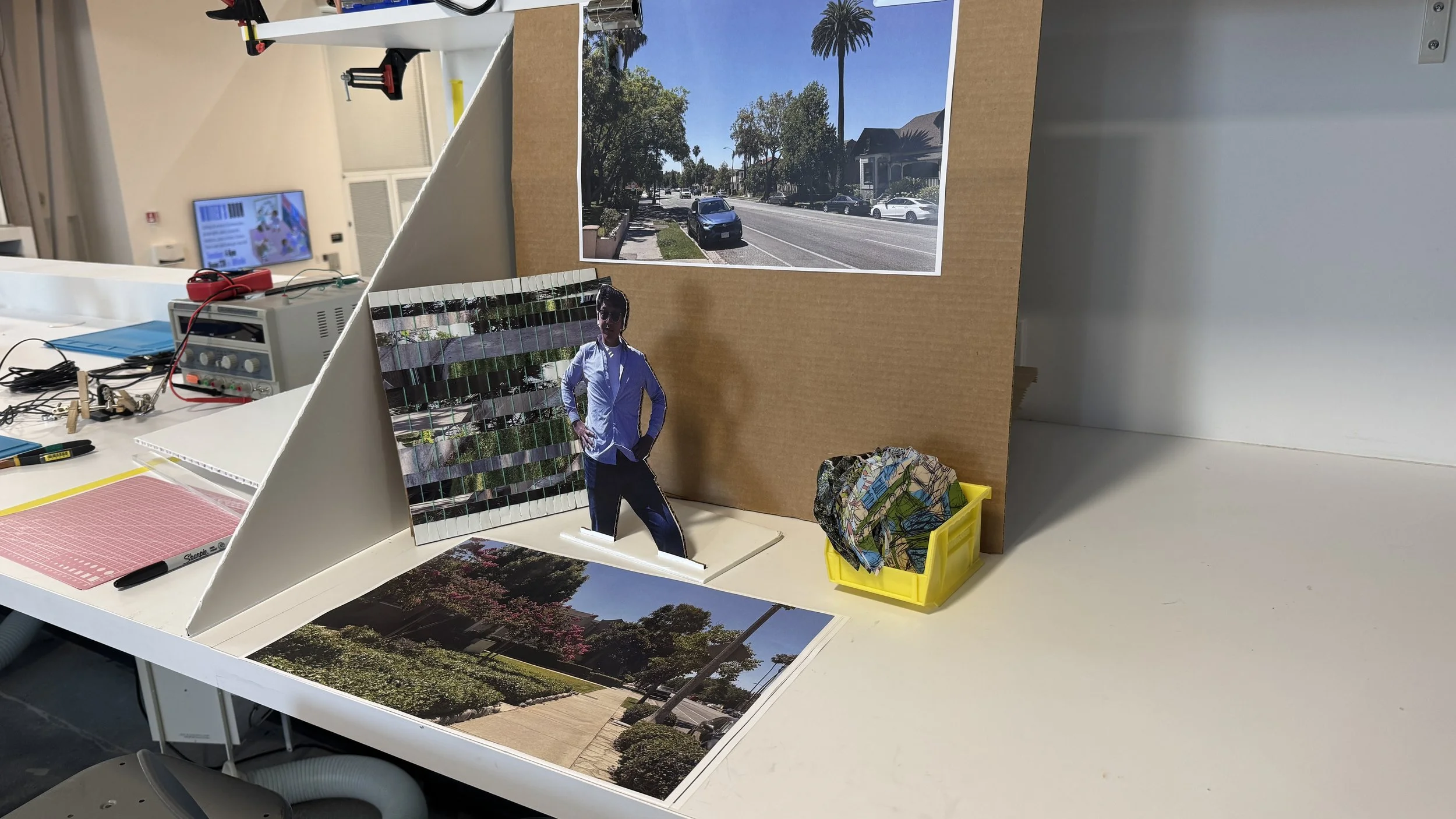
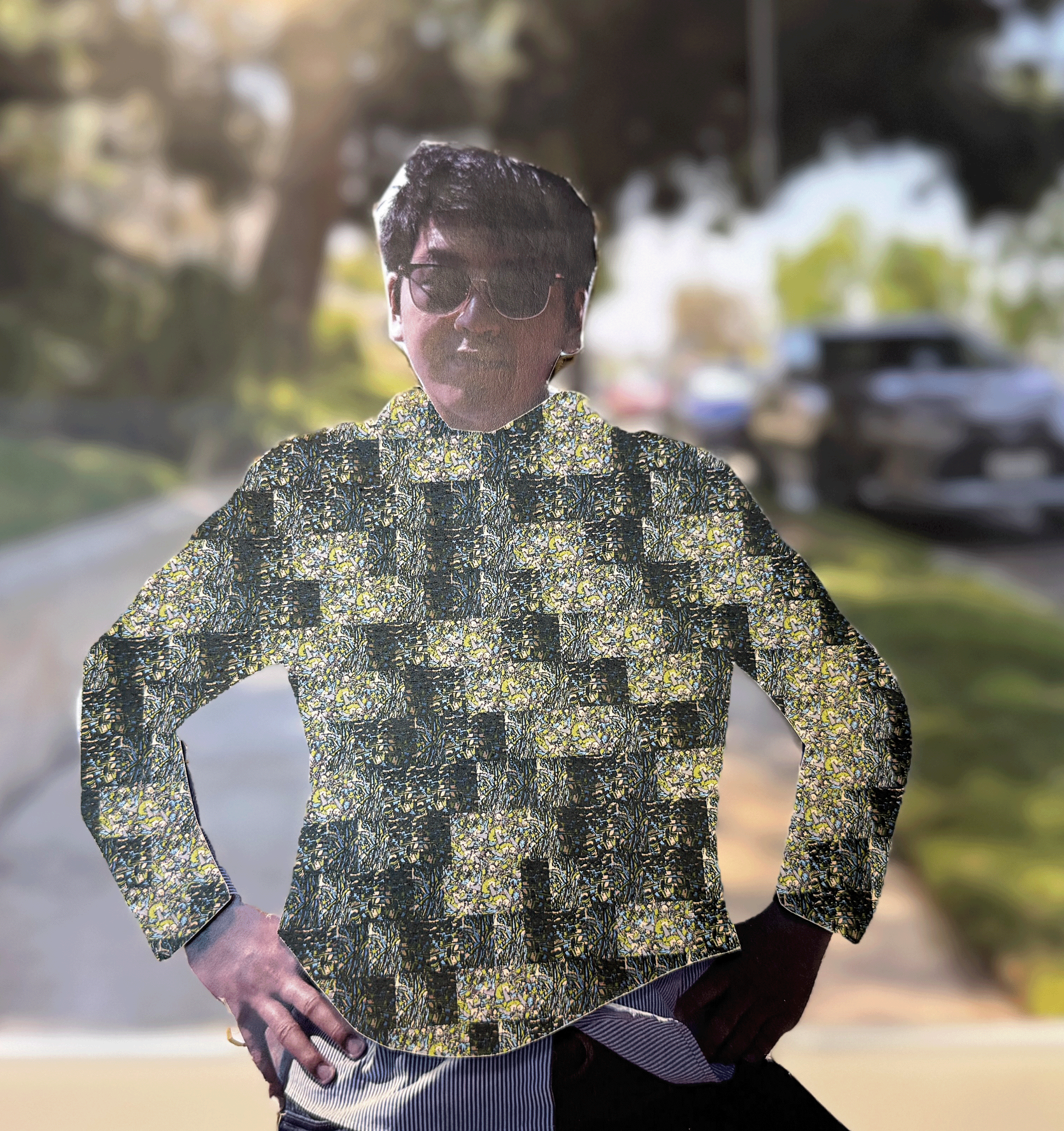
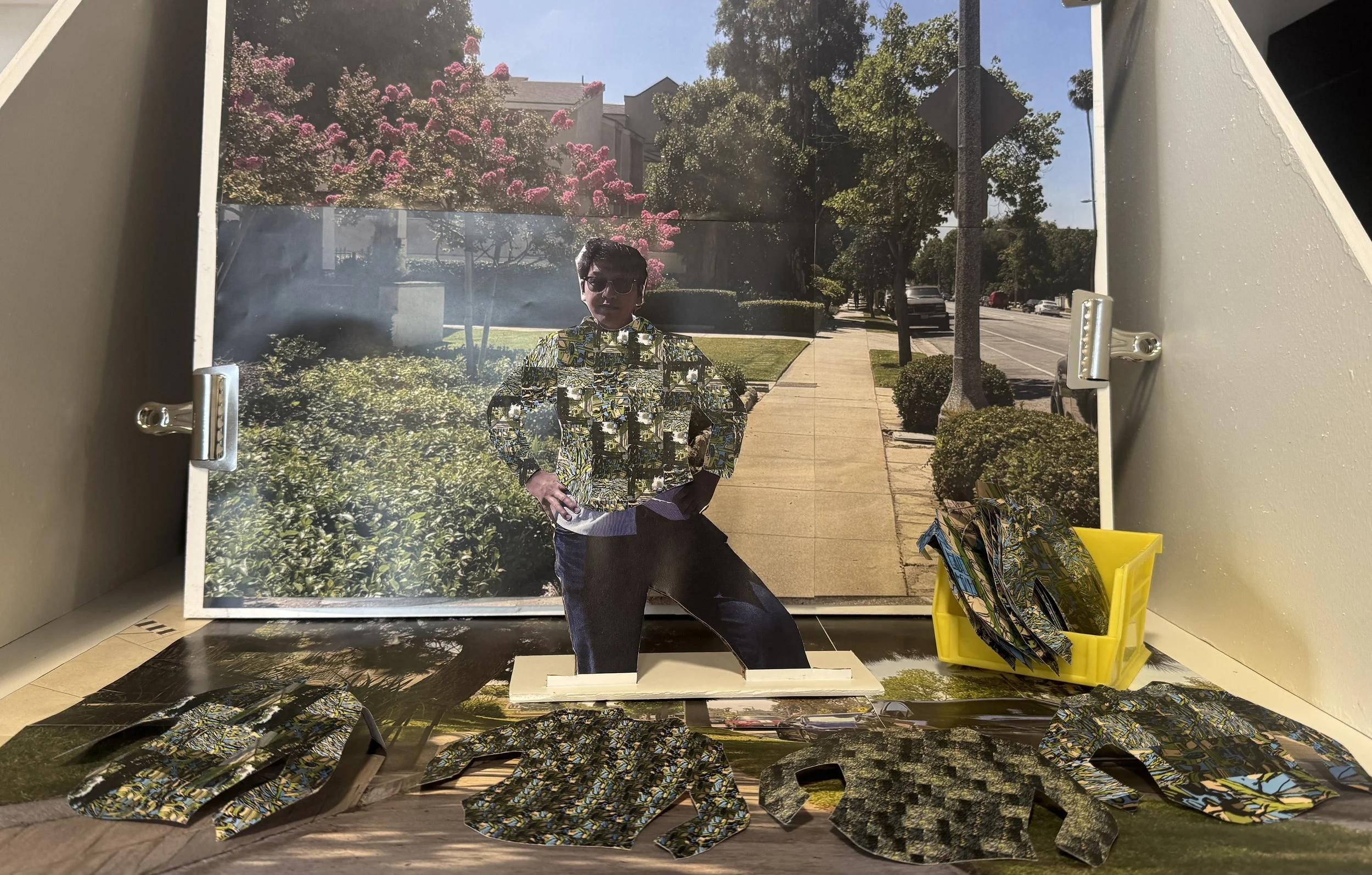
Print-Doll Simulation
Experiments on Traditional Features of Camouflage
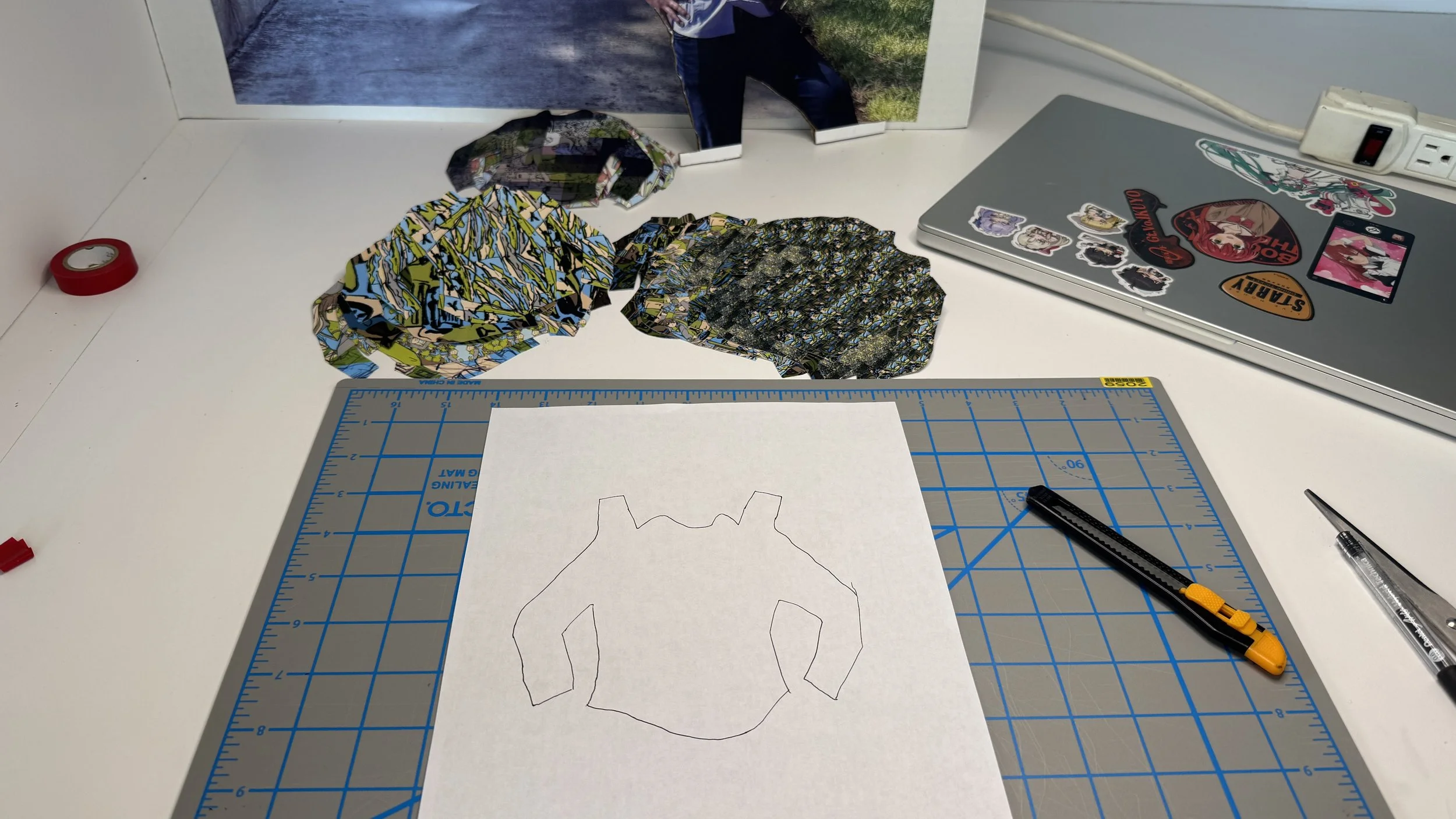
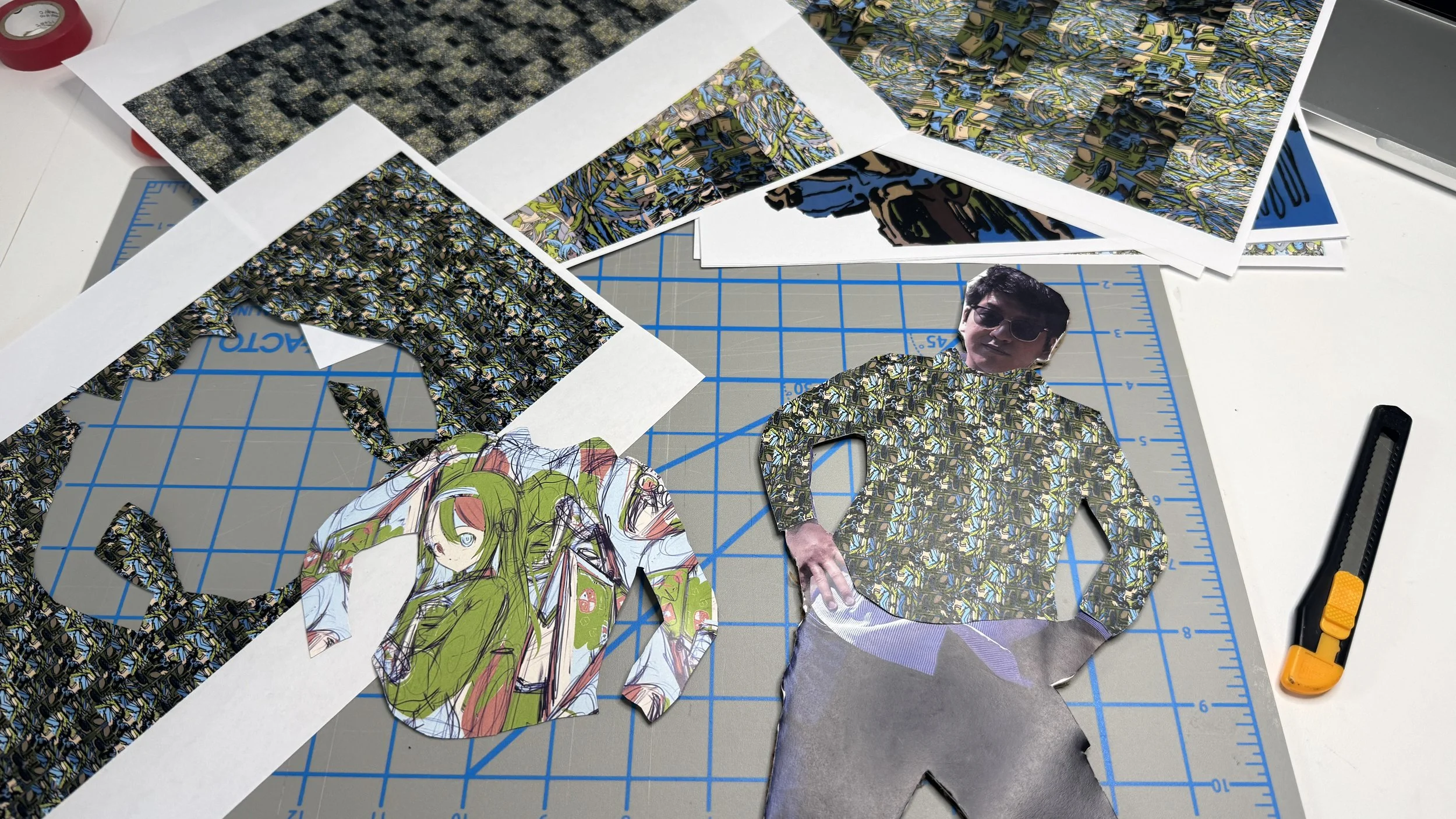
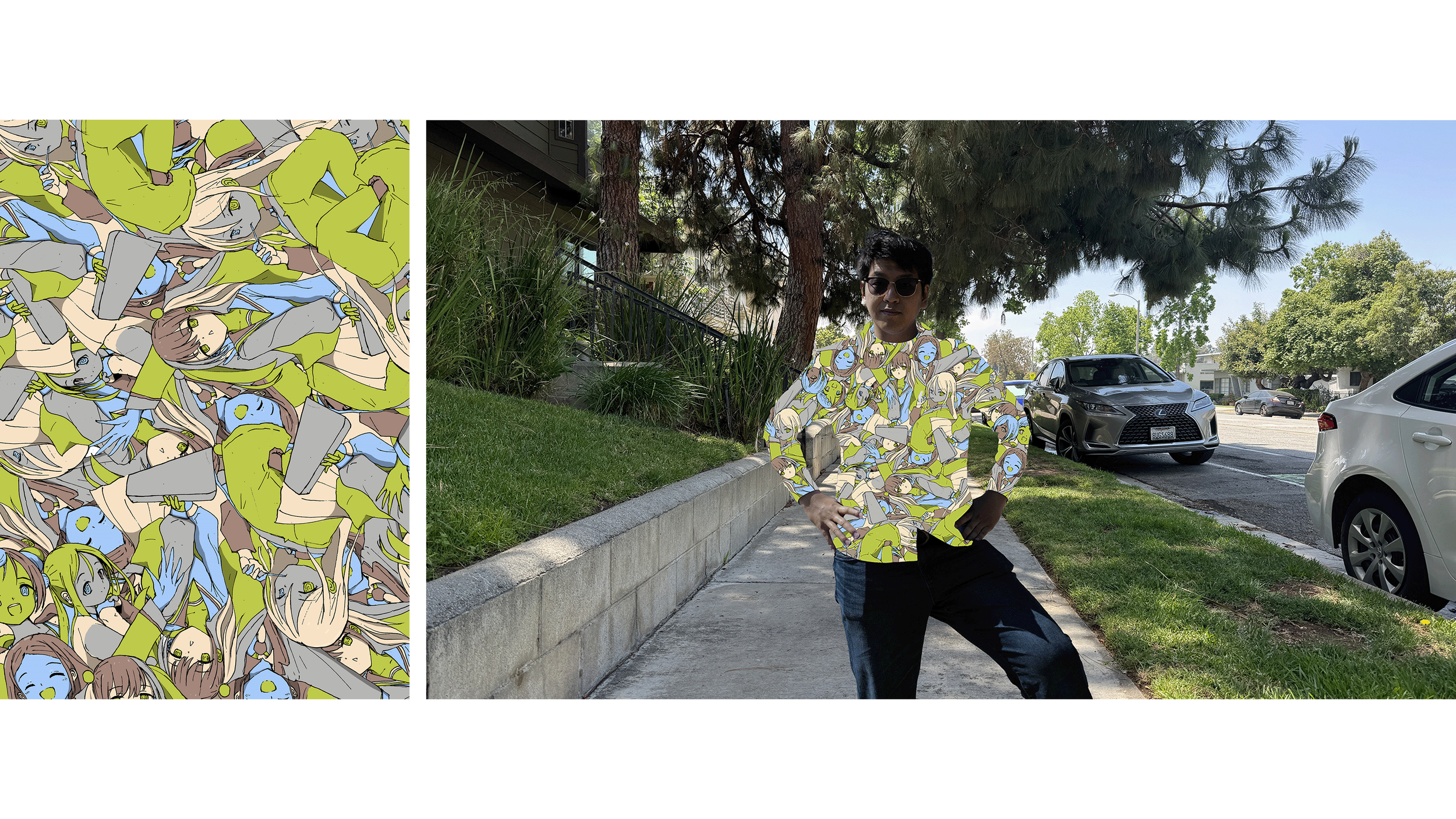
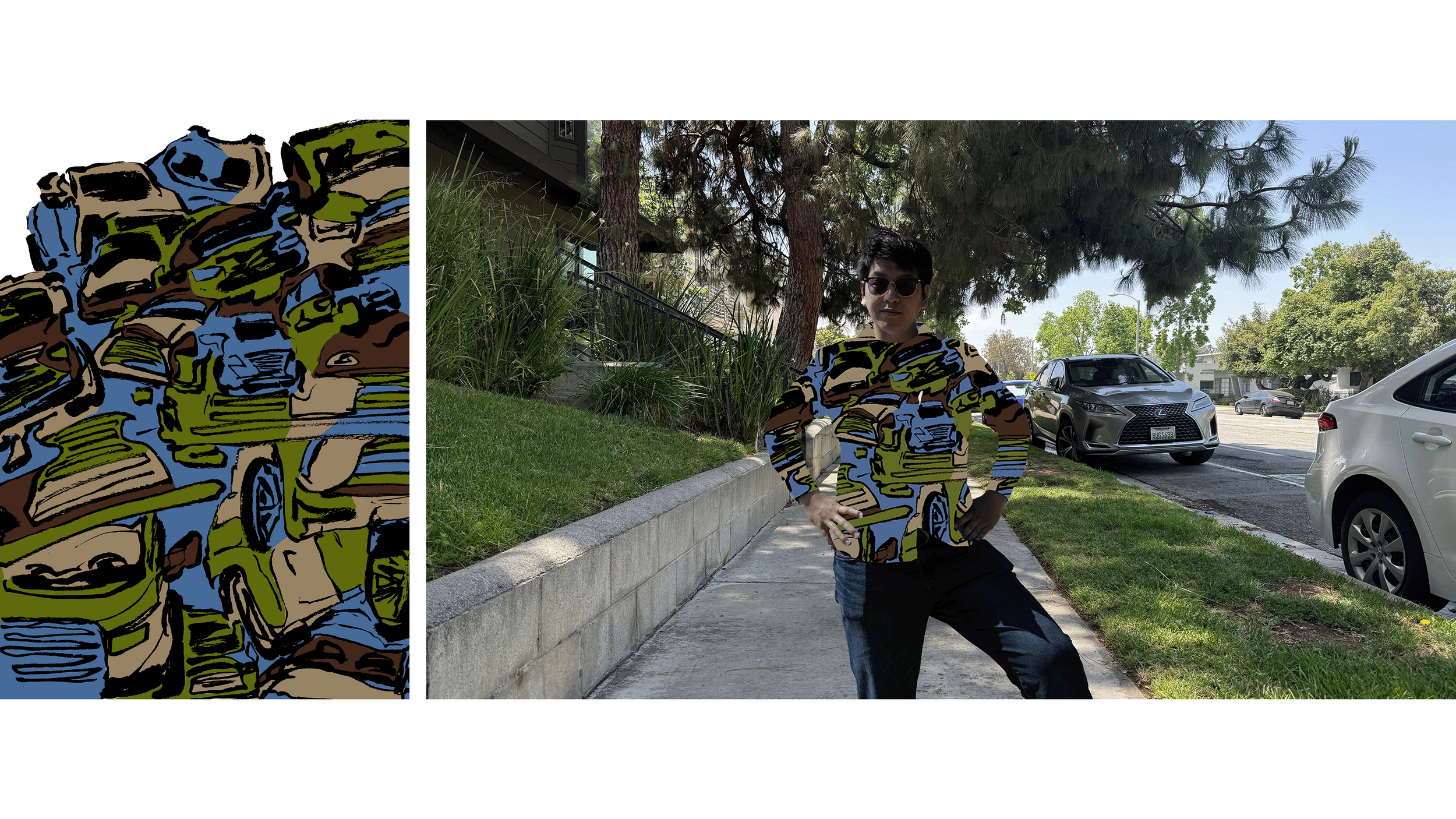
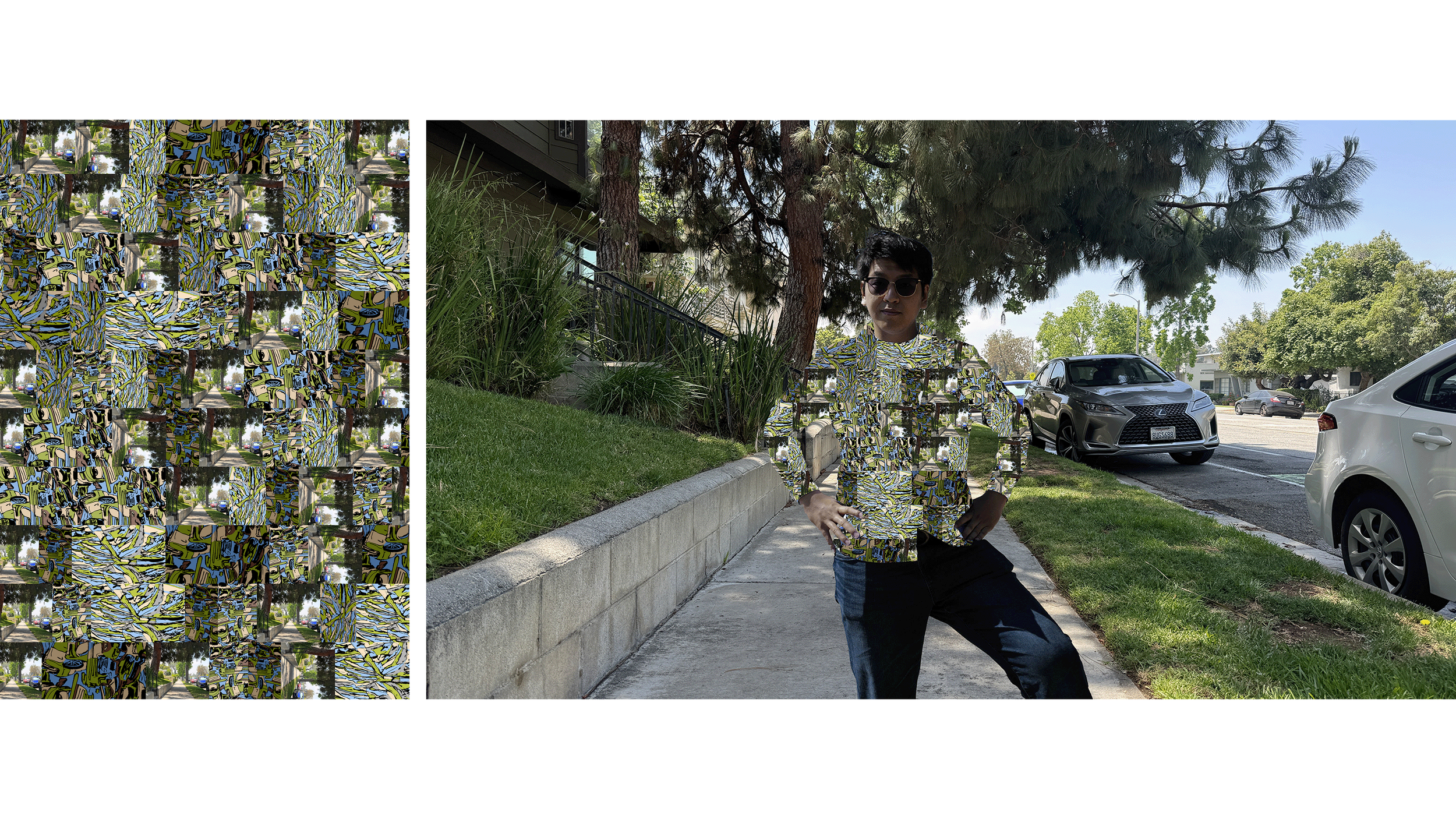
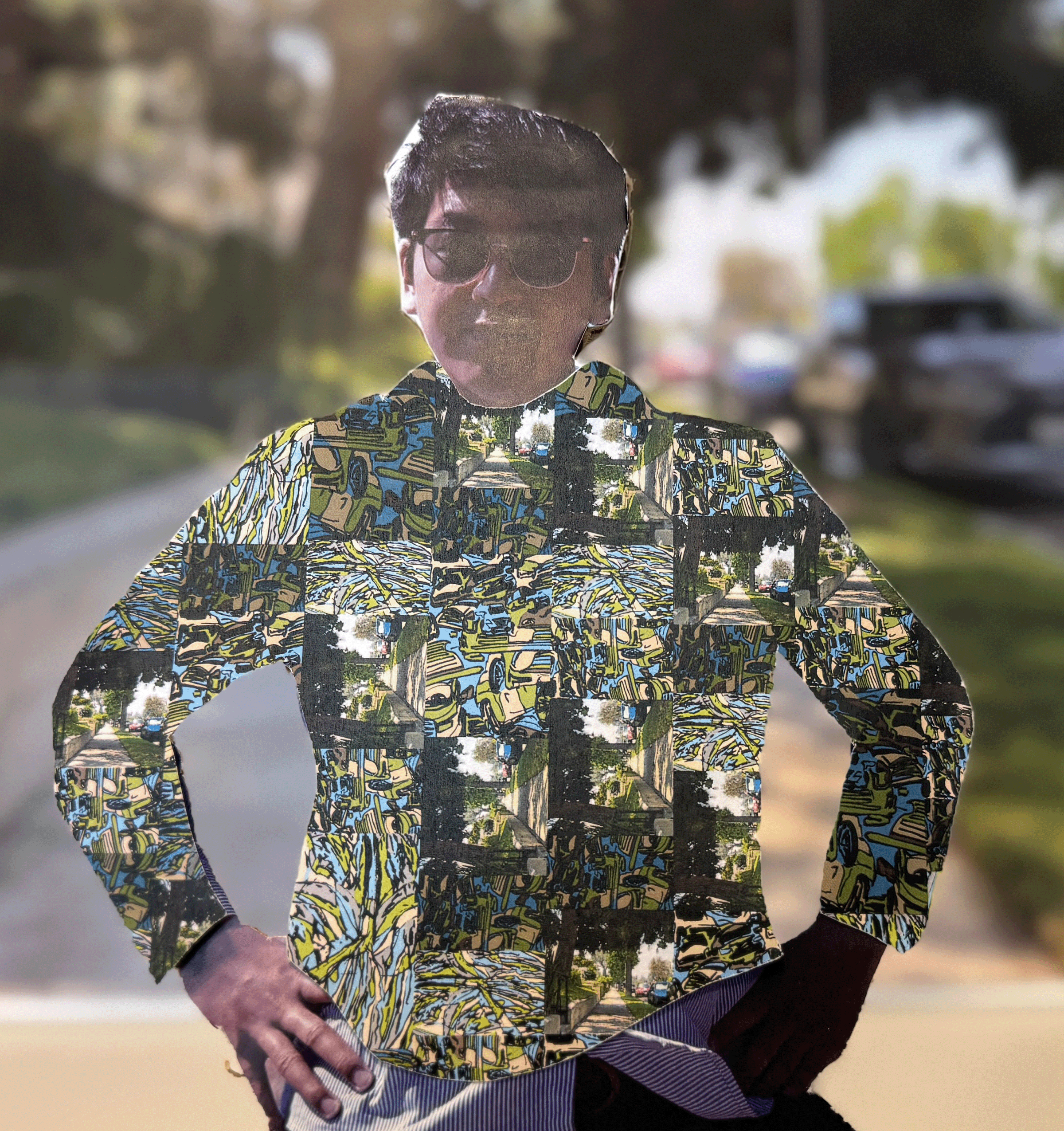
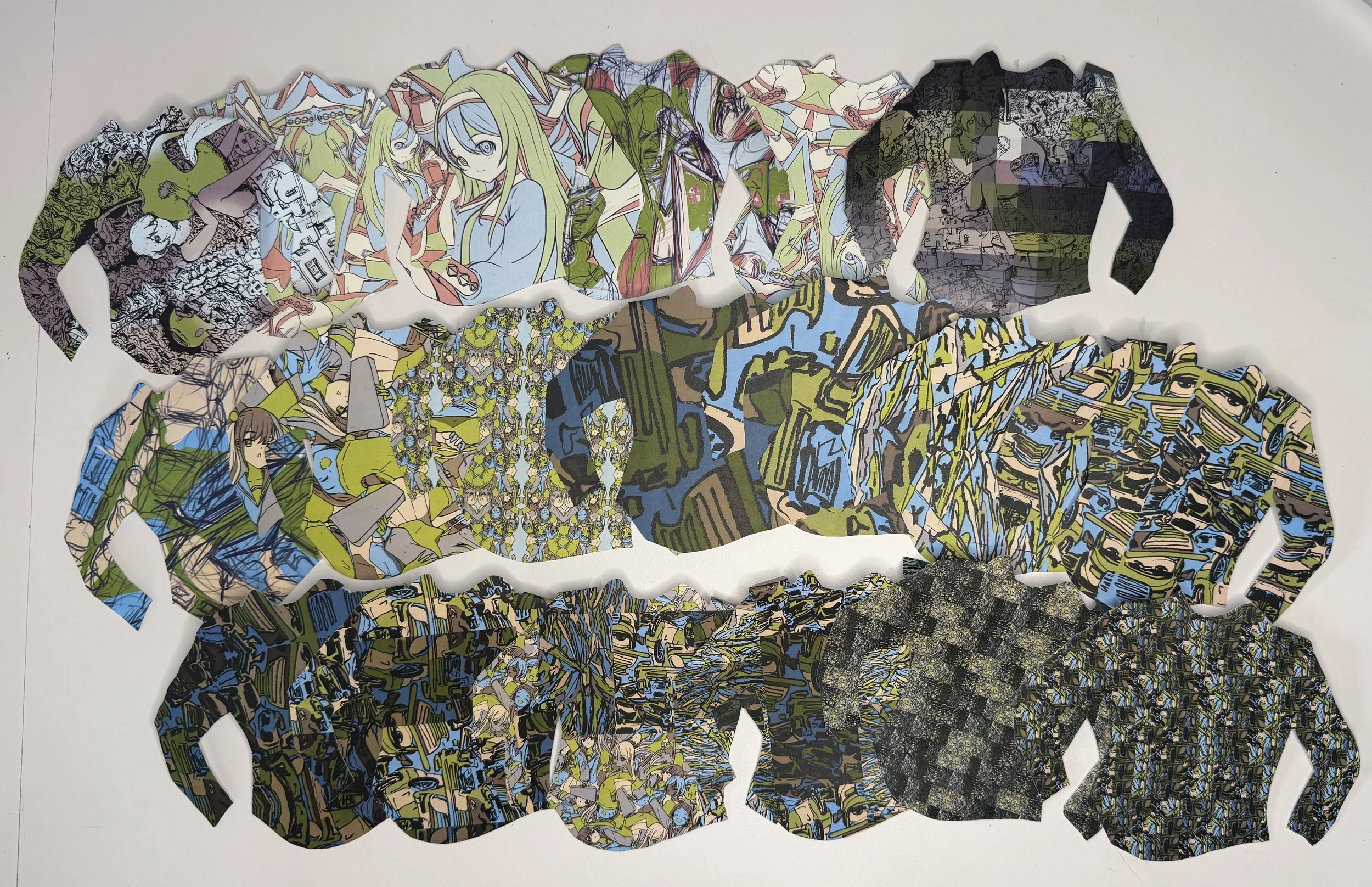
A Myriad of Drawings Turn into Print-Doll Costumes: the Contents of Camouflage
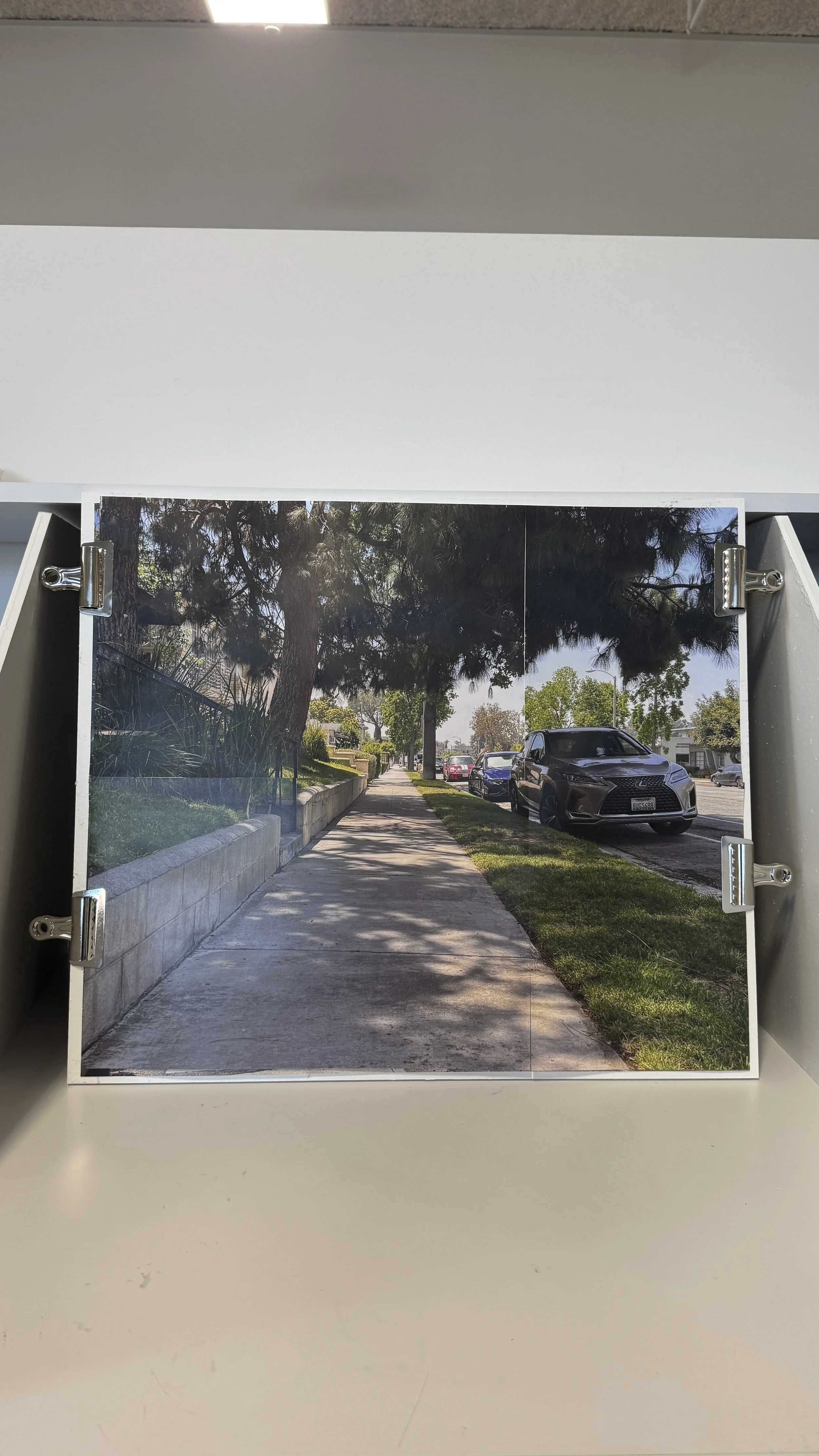
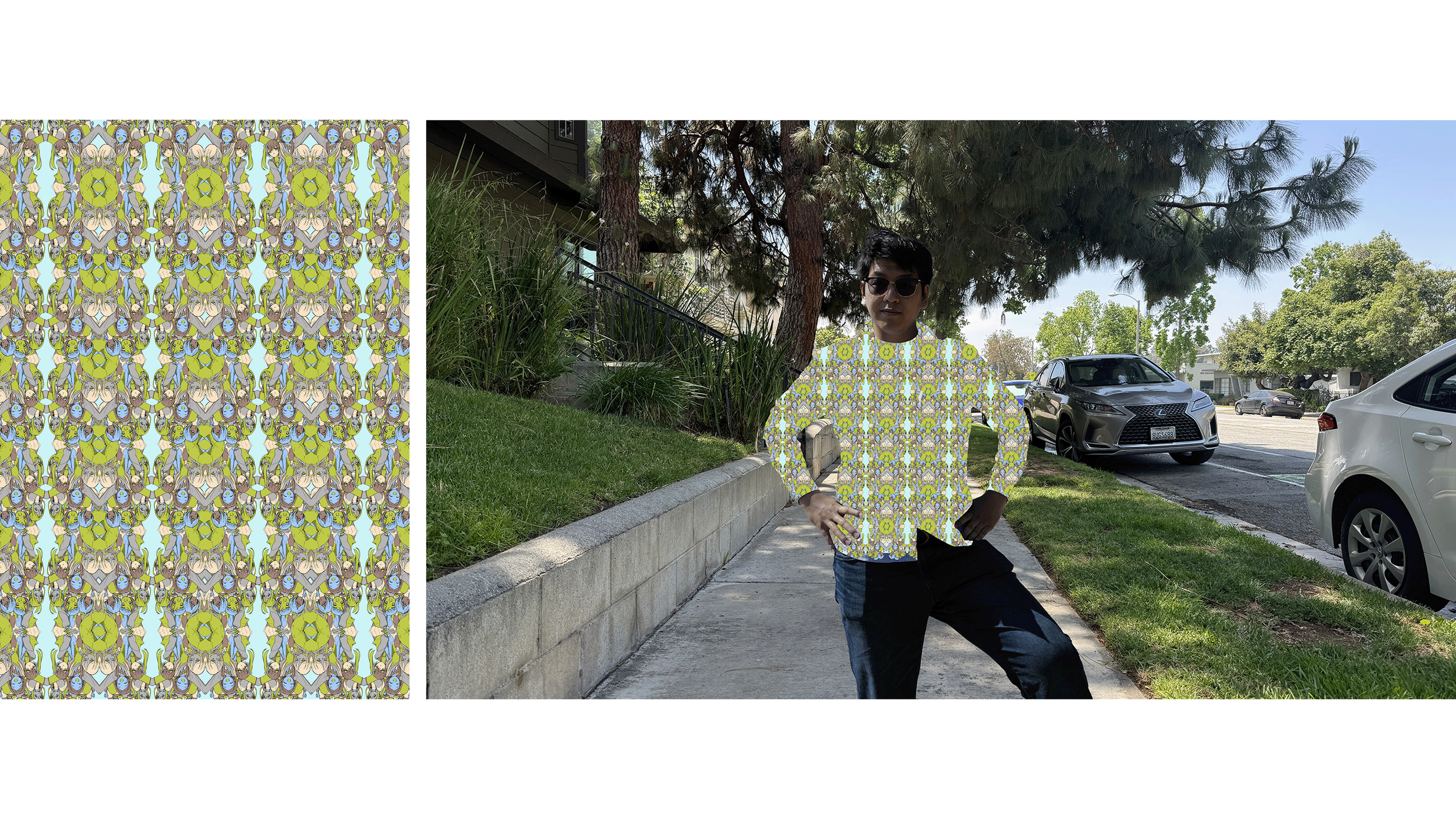
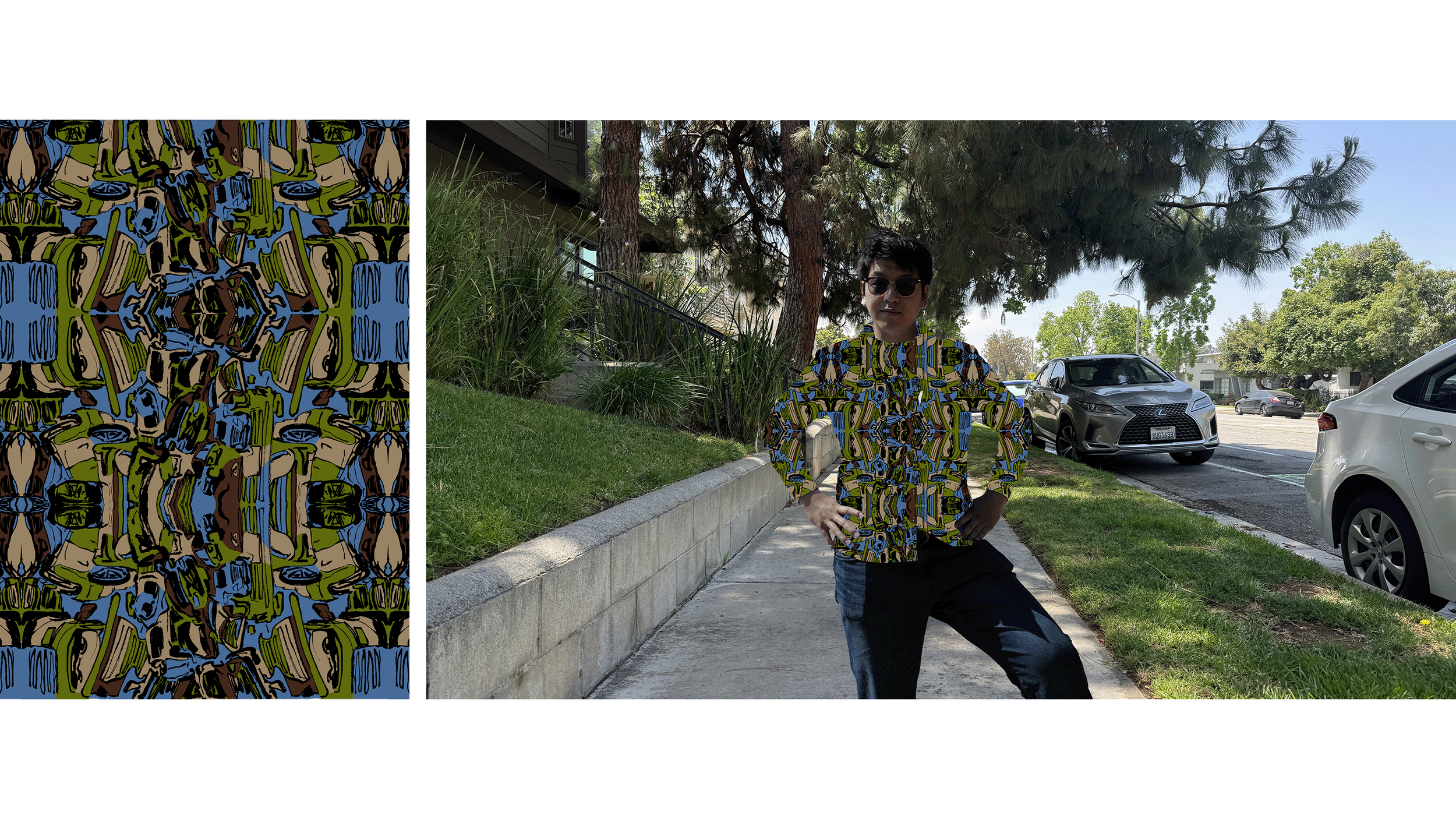
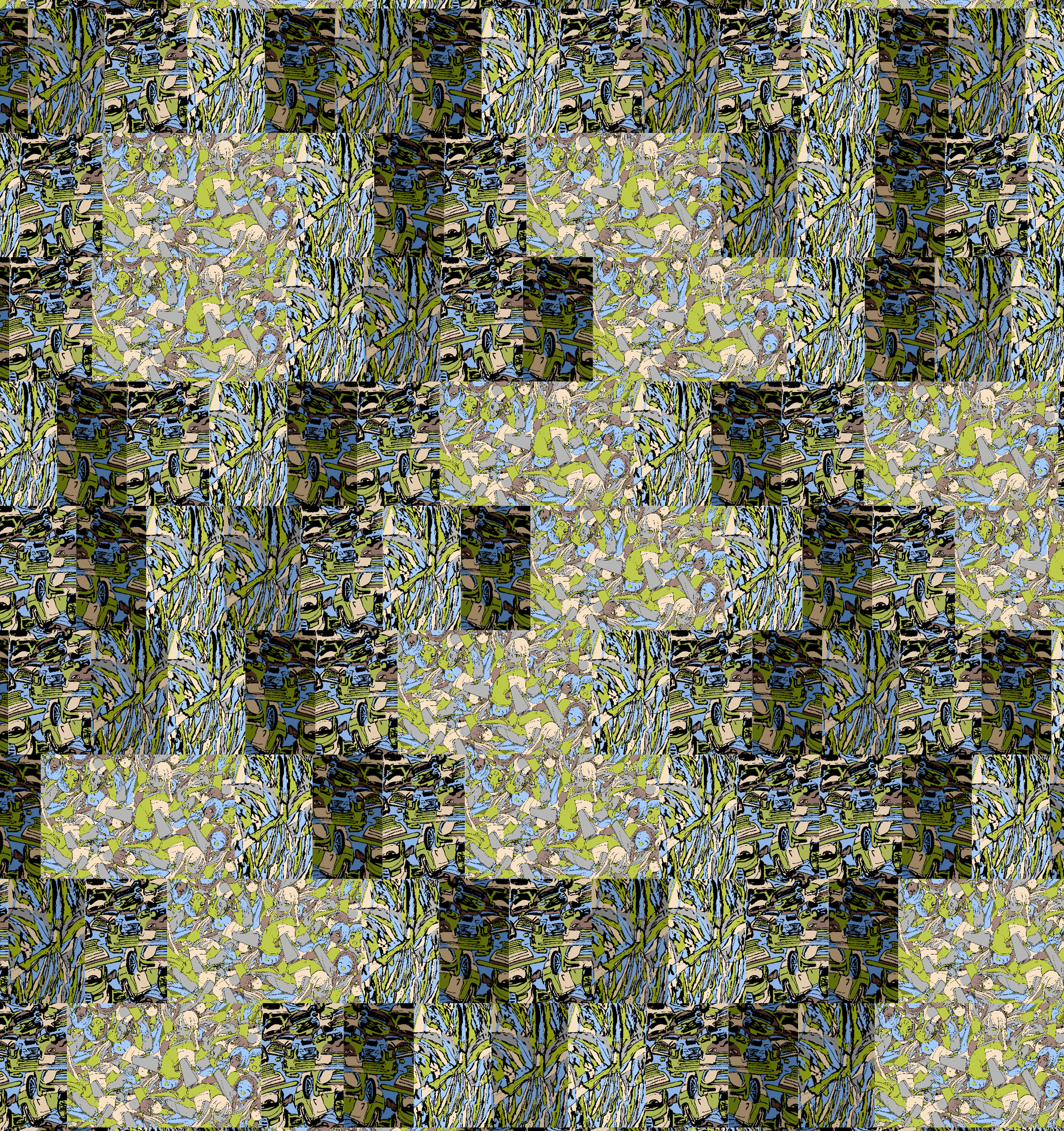
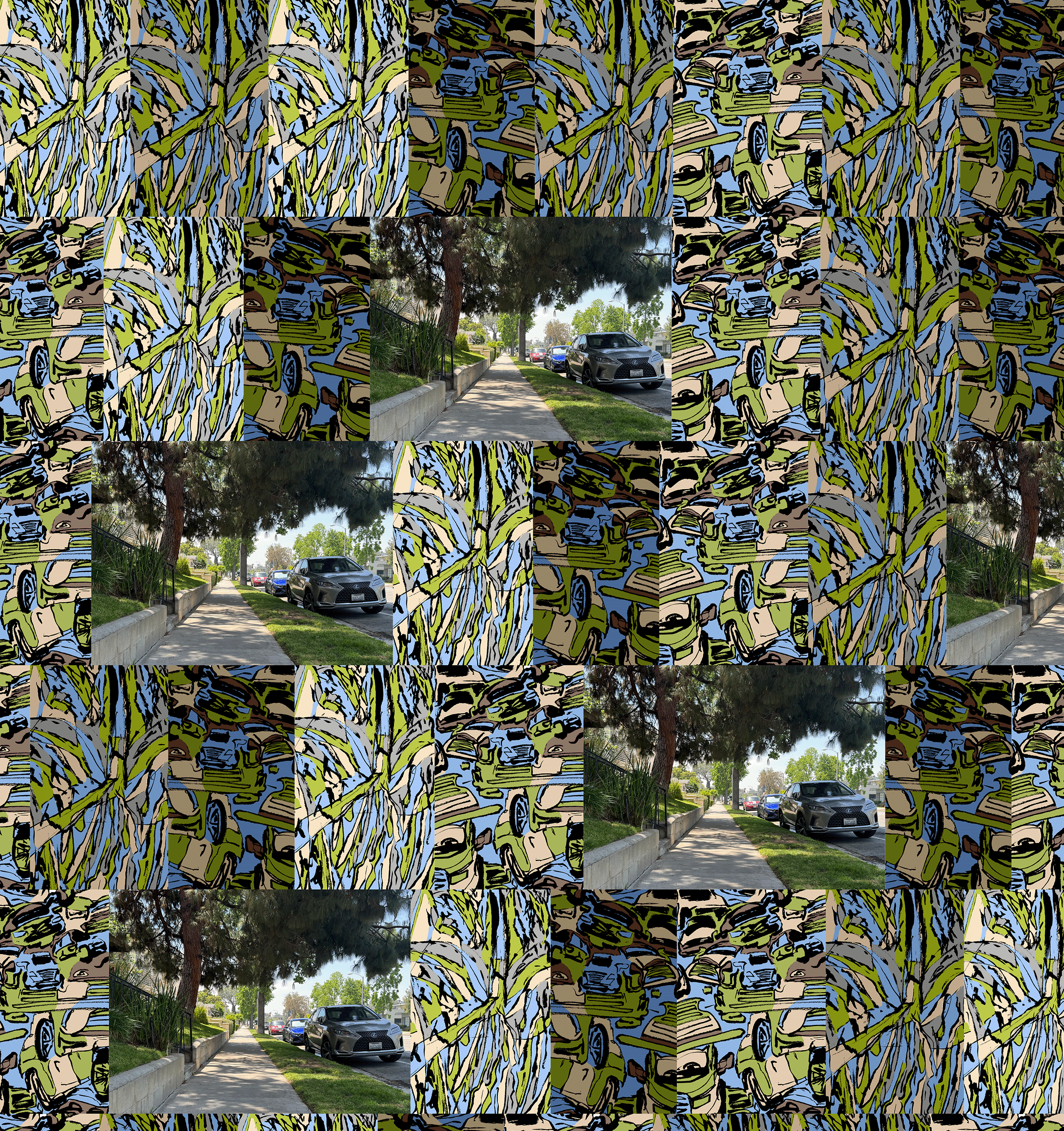
The content, scale, repetition, composition and colors of drawings vary and they are to be blended to the background. The content of the drawing would matter for the camouflage. Starting from the non-relatable characters to the relatable features like cars or grasses, based on the minimized number of colors, the relativity resonates with the background.
Human Brains tend to Simplify Complex Visual Factors: What Composition Forms Camouflage
The size of patterns render the whole composition into illusive entities. For depth, the saturation and brightness of patterns affect camouflage in a 3 dimensional sense. In addition, considering universal usage of military camouflage in any environment, different patterns from the same relatable source are mingled with the original photograph into a camouflage composition.





Problems and Limits
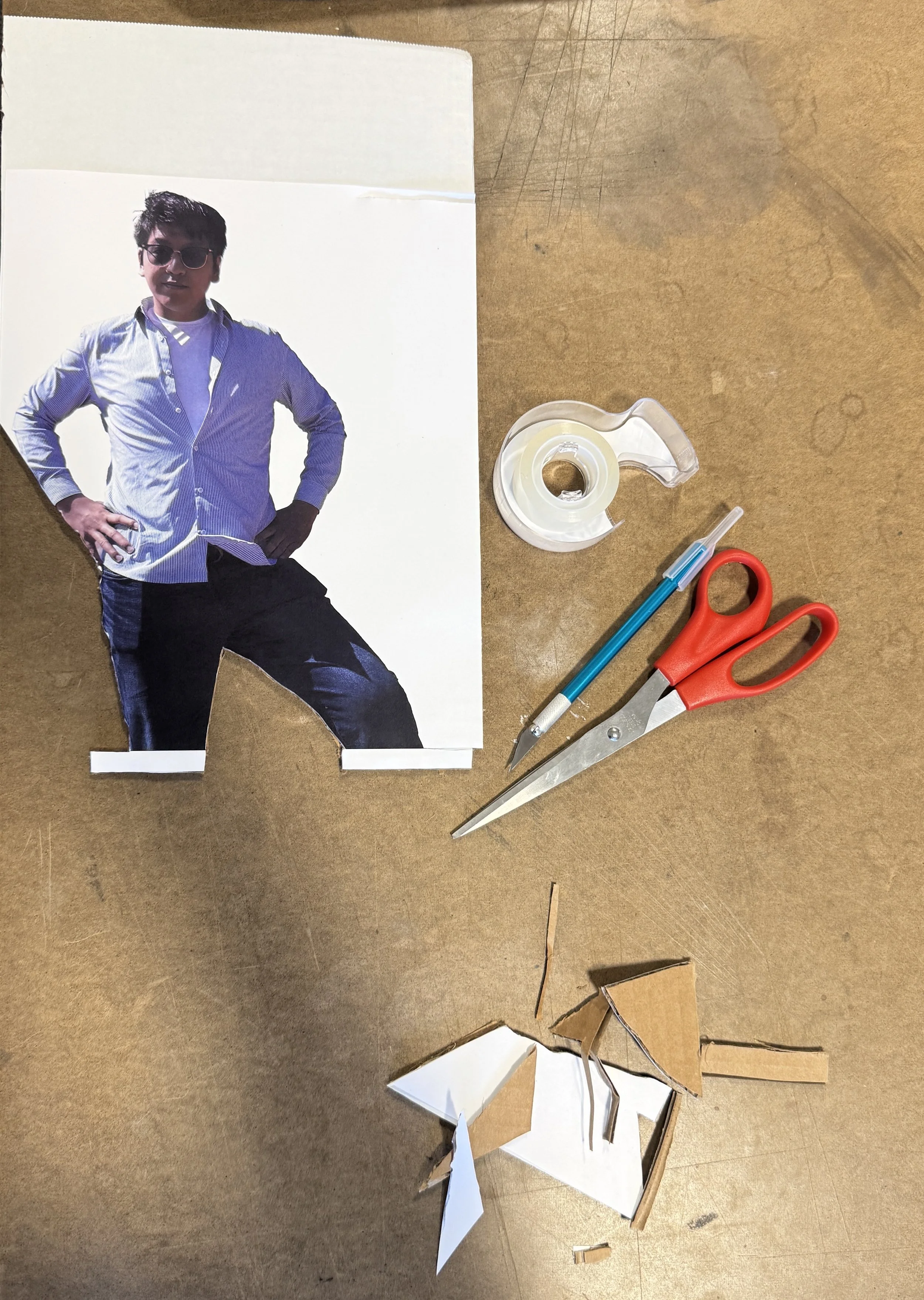
Since all the elements were all print-based, it was impossible to match the print-doll simulation equal to the real physical camouflage. Furthermore, the medium, print-doll, itself limited rooms for camouflage to expand more. As the meaning of camouflage at that time was limited in traditional idea, every variation ended up with mere color palette switching. At this moment, I had to decide how to render camouflage into metaphoric ways.